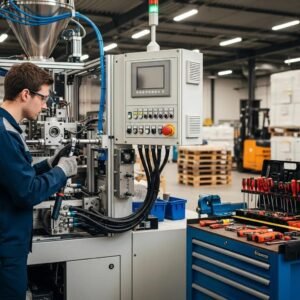
For plastic bag manufacturers in the United Arab Emirates, stable machine operation is a business requirement. Production schedules depend on equipment that can be monitored, adjusted, and maintained in a practical way. When an unexpected interruption affects a delivery, the impact may reach operators, material planning, packing, transport, and customer service. Selecting a plastic bag making machine with a clear operating process and dependable after-sales support can help factories manage these risks more professionally.
Stability Is More Than Keeping the Machine Running
Stable operation means that the machine performs predictably across the working day. It includes controlled feeding, steady film handling, reliable sealing, accurate cutting, and an operating interface that allows trained staff to understand the process. It also includes the ability to identify a problem early and make a controlled adjustment instead of relying on trial and error.
Bag factories often produce different sizes and formats for a variety of customers. A stable machine should support the planned product range while giving operators a practical way to change settings. The goal is not to promise that every production environment will be identical. The goal is to select equipment that matches the materials, bag designs, and working conditions of the specific factory.
Why Operator-Friendly Equipment Supports Better Results
Machine performance depends partly on the people who operate it. If controls are difficult to understand or routine adjustments are unclear, the factory may experience longer changeovers and inconsistent results. An operator-friendly design can help the production team follow a repeatable method for starting, checking, adjusting, and stopping the equipment.
This is important for businesses that employ teams with different levels of experience. A clear operating process helps management establish internal procedures for material preparation, machine settings, quality checks, and end-of-shift cleaning. It also makes it easier to identify whether an issue is related to material, setup, wear, or operation.
Training should be treated as part of the equipment decision. Before ordering, buyers should ask what operating guidance is provided, which maintenance tasks are expected from the factory, and how technical questions will be handled after installation. These questions help create realistic expectations for both the supplier and the customer.
Maintenance Planning Protects Production Time
Regular maintenance is one of the most practical ways to support stable production. A factory should know which components require routine inspection, cleaning, adjustment, or replacement. It should also understand how to keep common wear items and suitable spare parts available according to its operating plan.
Maintenance does not have to be complicated to be effective. A written checklist can cover the areas that operators inspect before production, during the shift, and after shutdown. Records can help the factory notice repeated issues and discuss them with the supplier in a more precise way. This approach is more useful than waiting until a small problem becomes a major interruption.
When requesting an offer, buyers should ask for information about recommended maintenance, component identification, spare parts, and technical communication. A supplier that provides clear documentation can help the customer build a more organised maintenance routine.
After-Sales Service Is Part of the Purchase Decision
Equipment cost is important, but service support also affects the long-term value of a machine. A supplier should be prepared to communicate about installation, operation, troubleshooting, replacement parts, and future questions. For UAE customers and buyers in nearby markets, practical communication is particularly valuable when production teams need guidance after the machine has been delivered.
Good after-sales service does not mean promising that every issue will disappear immediately. It means having a clear process for describing the problem, checking relevant information, identifying the next step, and following through. Buyers should ask how technical support is organised and what information the supplier needs when a machine requires attention.
A professional supplier will also make the machine configuration clear before production. Written specifications reduce misunderstandings about bag type, material, dimensions, sealing requirements, control features, and optional customisation. This supports a better handover from sales discussion to production planning.
Customisation Should Solve a Real Requirement
Customisation can be useful when it addresses a defined production need. A factory may require a particular bag dimension, sealing arrangement, control preference, or workflow connection. The best approach is to explain the intended products and operating conditions first, then evaluate which configuration is appropriate.
Customisation should not be treated as a collection of unnecessary features. Each option should be considered according to its effect on operation, maintenance, training, and total cost. This helps buyers make a practical decision and allows the supplier to prepare a more accurate technical proposal.
Choose Stability with Commercial Confidence
For plastic bag factories in the UAE, a stable machine supported by clear service communication can contribute to more predictable production management. It can help operators follow consistent procedures, support maintenance planning, and give buyers a stronger basis for evaluating the total investment.
Call to Action: Send us your bag specifications and production objectives. Our team can review your requirements and prepare a practical machine proposal with clear information about operation, customisation, and after-sales support.
Tags: Plastic Bag Machine, Machine Stability, After-Sales Service, UAE Packaging Industry, Bag Making Equipment