

Reliable Spare Parts and Components for Your Machines
Elevate your machinery performance with our premium spare parts and components. Trust in our quality and reliability for optimal operation and longevity.
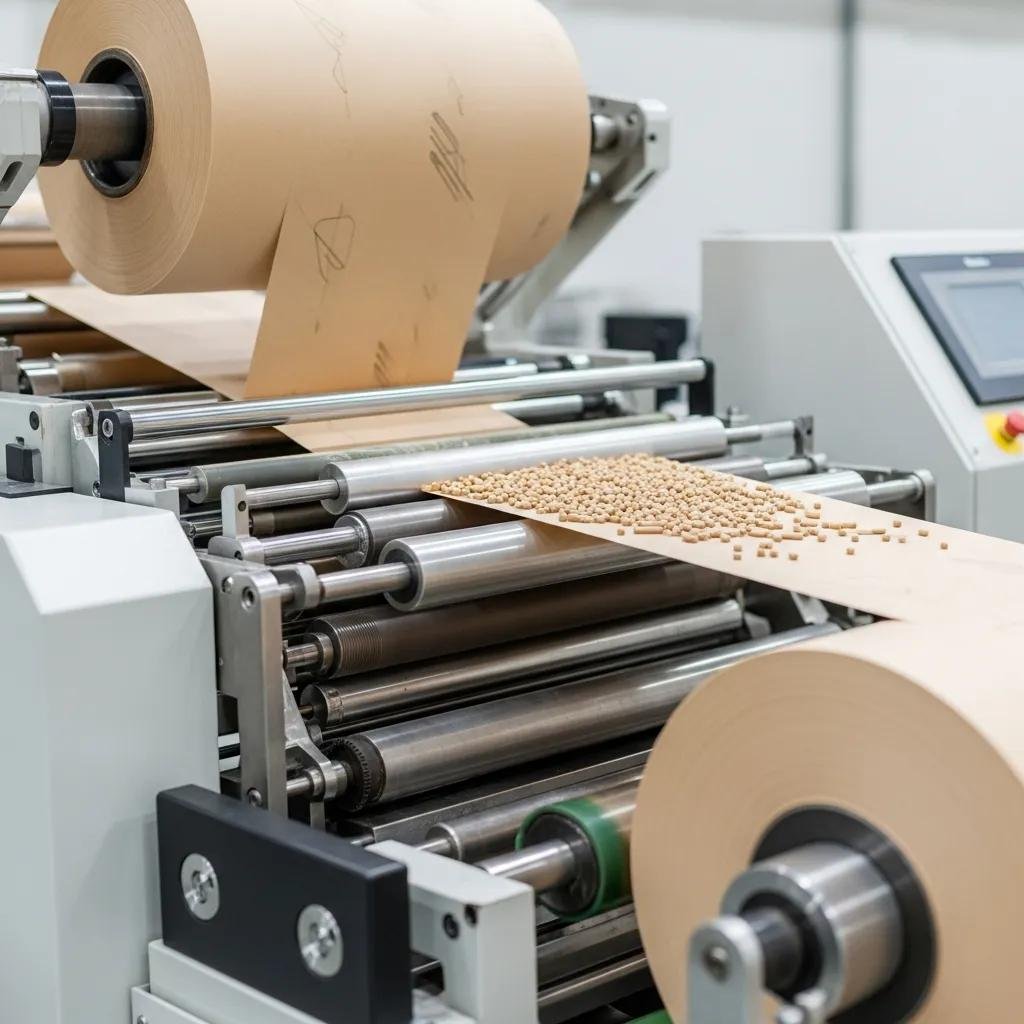
Eco-friendly paper drinking straw making machines are automated production lines that convert food-grade paper and compostable polymers into finished drinking straws at industrial throughput while replacing single-use plastic alternatives. These machines combine unwinding, gluing, spiral winding, cutting, and drying functions to deliver high-speed paper straw production with consistent dimensional tolerance, reduced manual labor, and lower environmental impact. Readers will learn how materials like food-grade kraft paper, PLA, and PHA compare for compostability and wet-strength, how the manufacturing workflow is organized, which technological innovations improve yield, and how to evaluate suppliers and maintenance needs. The article maps the production process step-by-step, compares biodegradable material options with an EAV-style table, outlines operational and regulatory benefits for procurement teams, and explains service and spare-parts considerations for long-term uptime. Throughout, target phrases such as paper straw machine, biodegradable drinking straw machine, high-speed paper straw machine, and paper straw production process are used to help engineers and operations managers identify the right equipment and practices for sustainable drinking straw production.
Eco-friendly paper drinking straw making machines are industrial converting systems designed to form compostable or biodegradable drinking straws from rolls of food-grade paper or compatible biopolymers, producing finished straws automatically and at scale. The mechanism centers on synchronized unwinding, precise adhesive application, spiral winding heads, multi-knife cutting, and controlled drying; this sequence converts flat paper stock into tubular straws with consistent wall thickness and length. These machines reduce manual handling, lower scrap rates through precision controls, and enable manufacturers to meet single-use plastic regulations while serving foodservice and retail markets. Understanding the machine class clarifies procurement criteria such as throughput, material compatibility, moisture resistance, and quality-control features that influence ROI and compliance.
A paper straw machine integrates a paper unwinder, gluing station, spiral winding head, multi-knife cutter, drying tunnel, and PLC control into a coordinated production line that outputs compostable paper straws ready for packaging. This system converts food-grade paper into a durable tubular straw using water-based adhesive and moisture-control processes that preserve compostability while maintaining mouthfeel and wet-strength. For example, a mid-size supplier transitioning a cafe chain from plastic to compostable straws can use such a line to produce tens of thousands of straws per day, meeting both volume and regulatory requirements. Defining these elements helps purchasers compare hyponyms like high-speed paper straw production line and automatic paper straw machine by explicit capabilities and expected throughput.
High-speed and automatic paper straw production lines emphasize throughput, automation, and quality control to deliver reliable, scalable output for commercial customers. Core features include servo-driven feeding for consistent tension, PLC and HMI controls for parameter recall, multi-knife cutters for fast and accurate length control, and optional vision systems for defect detection; each feature improves yield, reduces rework, and supports sustainable manufacturing goals. Advanced lines often include modular design to switch between straw diameters and lengths quickly, and energy-efficient drying tunnels to lower footprint and thermal losses. These capabilities matter because they directly affect labor costs, scrap percentage, and the ability to meet evolving regulatory standards for single-use alternatives.
These features lead naturally into material compatibility considerations such as which papers and compostable polymers perform best in automated lines.
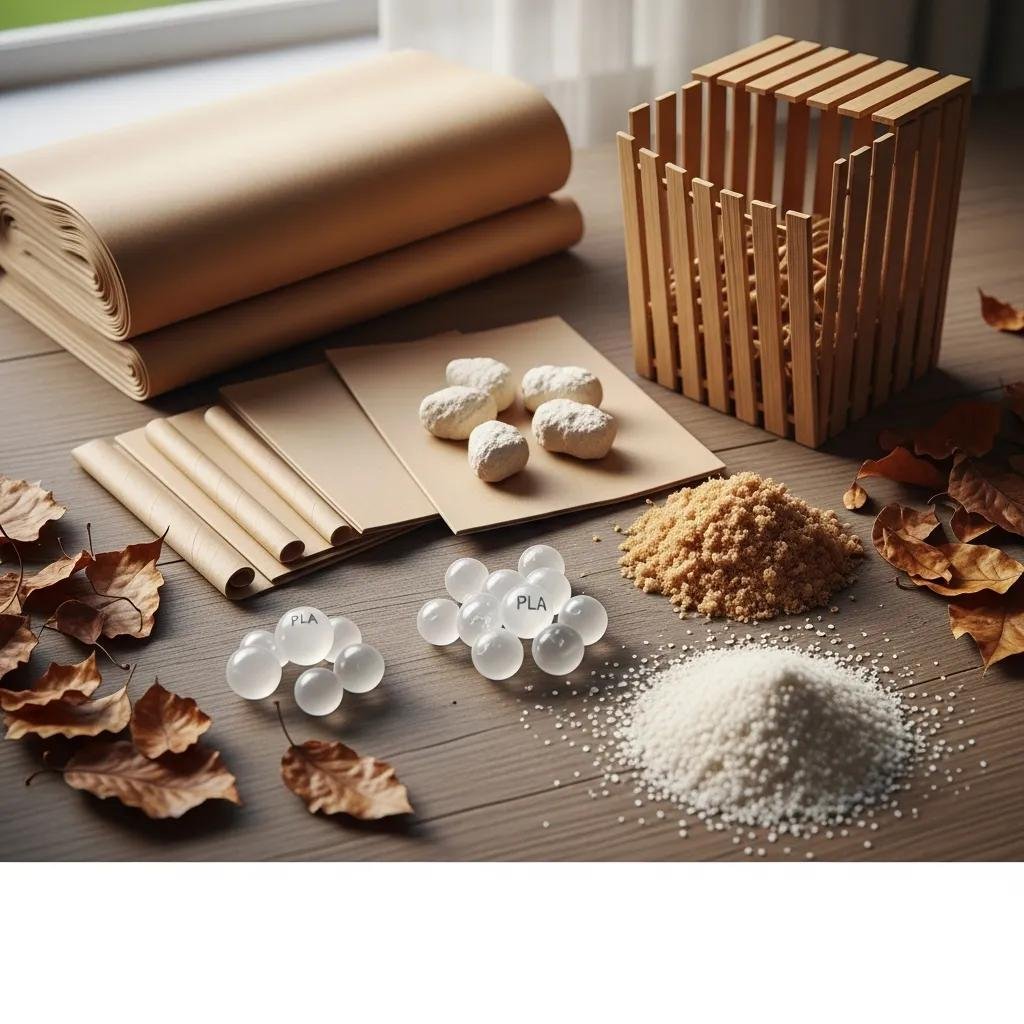
Choosing the right biodegradable materials is critical for balancing compostability, wet-strength, mouthfeel, certification needs, and production cost. Materials commonly used are food-grade kraft paper, PLA-coated or PLA-compatible papers, and PHA formulations; each material offers a different mix of biodegradability timeline, moisture resistance, and procurement considerations. Manufacturers must also select water-based adhesives and coatings that preserve compostability and meet food-contact safety requirements. Below is a scannable comparison table to aid procurement and R&D decisions, followed by a short discussion of coatings and adhesive strategies.
The table below compares common materials by biodegradability, food-safety, cost, and moisture resistance.
This comparison shows that procurement choices depend on target end-of-life conditions, product positioning, and production tolerances. Next, we examine water-based adhesives and coatings that keep straws compostable while improving durability.
Food-grade kraft paper is widely used because it balances cost, mouthfeel, and certified food safety; it typically requires water-based adhesives and may need a moisture-resistant layer for extended beverage contact. PLA blends improve moisture resistance and reduce sogginess in long-use scenarios but generally need industrial composting to degrade efficiently, which affects end-user disposal expectations. PHA offers promising home-compostable performance with superior wet-strength, though it tends to be costlier and may be chosen for premium product lines where compostability and performance justify higher material spend. Buyers should weigh supply-chain volatility and certification needs — for example, FSC sourcing and compostability verification — when selecting base stock.
Water-based adhesives and PFAS-free, eco-certified coatings are the recommended approach for maintaining straw durability while preserving compostability and food-safety compliance. These adhesives provide sufficient bond strength for spiral winding without introducing solvents or persistent fluorinated chemistries, and they simplify drying and curing steps compared to solvent-based systems. Coating trade-offs include a balance between moisture resistance and full biodegradability; nanocellulose or biodegradable polymer coatings can add wet-strength but must be tested for certification and food contact safety. Understanding these adhesive and coating choices prepares manufacturers to tune process parameters like drying temperature and glue feed rate to achieve the desired straw performance.
Choosing suitable materials and adhesives sets process parameters addressed in the production workflow below.
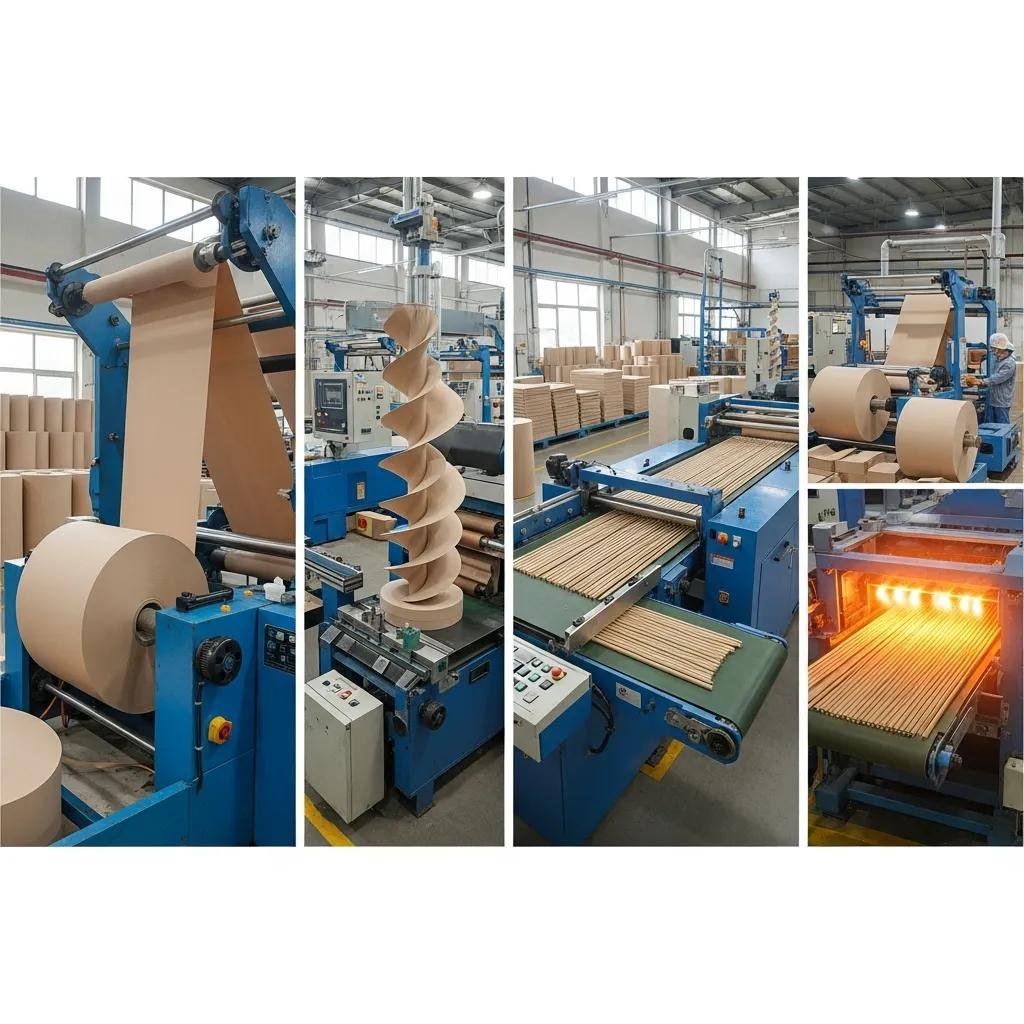
The paper straw manufacturing process follows a predictable sequence: unwinding raw rolls, applying adhesive, spiral winding into tubes, cutting to length, and drying/curing — each step affecting throughput, tolerance, and finish quality. Rapid, reliable production depends on controlling roll tension, glue volume, winding concentricity, cutter timing, and drying temperature; these control points determine scrap rates and dimensional consistency. Innovations such as AI visual inspection and IoT-enabled predictive maintenance reduce downtime, while modular head designs speed changeovers. The numbered overview below targets a featured-snippet style answer followed by an EAV table that lists process steps with recommended metrics and common issues.
The core manufacturing steps are:
These steps highlight the critical control points that affect yield and product performance; the following table provides best-practice parameters for each step.
Unwinding stabilizes paper input by managing roll weight and tension to prevent slip or wrinkles, with best practice involving automatic roll splicing and tension feedback loops to minimize stoppages. Gluing requires accurate metering pumps and nozzles that deliver consistent bead width; fine-tuning glue viscosity and feed rate reduces drip and improves bond reliability. Spiral winding demands precise alignment and servo control to maintain concentric layers and wall thickness; shaft-mounted winding heads with quick-change tooling speed format shifts. Cutting uses multi-knife systems or rotary cutters to produce smooth edges at target lengths, while drying tunnels apply controlled heat and air flow to set adhesive without damaging paper finish. Each step has sensors and inspection points to catch deviations early and keep scrap rates low.
Recent innovations improve uptime, reduce waste, and increase product consistency across paper straw machines, notably IoT predictive maintenance, AI visual inspection, and energy-recovery systems that lower operating costs. IoT modules monitor vibration, temperature, and cycle counts to predict component wear and schedule maintenance before failures occur, decreasing unplanned downtime. AI visual inspection systems flag edge defects, glue inconsistencies, and dimensional drift with higher accuracy than manual checks, enabling corrective actions within a production shift. Energy recovery and modular automation reduce energy intensity and permit capacity scaling without a full line rebuild, which supports both sustainability and economic planning for manufacturers.
These technologies set the stage for supplier selection and service expectations when choosing a manufacturer.
Selecting a manufacturer requires evaluating quality assurance, R&D capability, customization options, delivery timelines, and environmental responsibility; Kingdom Machine Co., Ltd. presents a set of proven claims and service features that directly address these procurement concerns. The company reports 100% final inspection with a 1–3% defective control target, a two-year warranty on timer switches, an R&D team, multiple production lines and a lab for testing, and a global presence with many machines deployed in diverse markets. These attributes support buyers who need reliable equipment, rapid sample delivery, and OEM/ODM customization to match material choices and output requirements. Below are compact proofs of capability followed by key purchasing considerations that align with the topic-first assessment criteria buyers should use.
Kingdom Machine Co., Ltd. emphasizes final inspection and defect control measures as part of quality assurance, offering 100% final inspection and reported defect control within a 1–3% range to maintain consistent product standards. Their R&D team and dedicated lab support testing of material-glue-drying combinations, enabling customized solutions and OEM/ODM packaging or machine adjustments for specific paper stocks or compostable coatings. The company states multiple production lines and a development lab, which help accelerate sample preparation and validation runs, and they position customization as part of a one-stop service model for buyers seeking tailored straw diameters, lengths, and throughput. These capabilities reduce integration risk and shorten validation cycles for procurement teams evaluating machinery.
These supplier features naturally inform buyer expectations relating to pricing, delivery, and sustainability commitments.
Kingdom Machine Co., Ltd. reports competitive sample and lead times—samples available in three days and bulk production for standard machines in 15–20 days—supporting accelerated project timelines for companies shifting away from plastic straws. The firm cites production scale and multiple lines as drivers for competitive pricing and faster lead times, while environmental responsibility initiatives are stated as part of design and manufacturing choices that reduce waste and energy usage. For buyers prioritizing rapid market entry and verifiable inspection regimes, these delivery and warranty terms help quantify procurement risk and support ROI calculations tied to regulatory compliance and market demand.
If you want to request a quote or technical details for a specific paper straw machine model, contact Kingdom Machine Co., Ltd. by email at sales@kingdommachine.com or by phone at 0086-13088651008; their manufacturing address is listed as Ruian Economic Zone, Wenzhou, China 325200. These contact points facilitate technical discussions, customization requests, and sample arrangements for validation runs.
Investing in eco-friendly paper straw machines delivers measurable environmental compliance benefits, operational efficiencies, and brand differentiation that open new market channels and reduce long-term costs. Machines enable consistent compostable straw output that meets regulatory drivers such as single-use plastic restrictions, deliver labor and energy efficiencies, and support branding strategies centered on sustainability and certified materials. Below is an EAV-style table linking key benefits to KPIs and typical ranges, followed by specific operational and market advantages that procurement and plant managers can use in ROI calculations.
This mapping clarifies how machine investments translate into measurable gains for operations and sustainability reporting. Next, we explore regulatory and market growth drivers plus operational savings that often justify capital outlay.
Adopting paper straw machines helps businesses comply with single-use plastic restrictions and capitalizes on market growth driven by consumer demand for compostable alternatives; recent market analyses show expansion in demand for sustainable packaging and single-use replacements. Machines provide controlled material selection and traceability for certifications such as FSC or compostability standards, making it easier to meet buyer and regulatory requirements. For market-entry, being able to produce certified compostable straws in-house opens foodservice, retail, and private-label channels that increasingly prefer verified sustainable packaging. These compliance and market-access advantages directly support topline growth and reduce exposure to regulatory fines or forced product redesigns under evolving legislation.
Automated paper straw production improves operational efficiency by reducing manual labor, decreasing scrap through precise controls, and shortening time-to-market with faster sample and bulk delivery options; these factors combine into lifecycle cost savings. Throughput and labor savings translate into lower per-unit cost at scale, while reduced disposal and reputational risk provide indirect cost avoidance. Brand differentiation is achieved by offering certified compostable products and documented production controls, which strengthens retailer and end-customer trust. For concrete procurement evidence, Kingdom Machine Co., Ltd.’s reported defect control metrics and rapid sample timelines can be used as input parameters when modeling ROI, helping quantify expected savings and payback periods.
These benefits naturally lead to operational questions about maintaining uptime and accessing spare parts, covered in the next section.
Maintaining paper straw machines requires a preventative schedule, timely troubleshooting protocols, and reliable access to spare parts and technical assistance to preserve uptime and product quality. A systematic maintenance program includes daily cleaning and inspection, weekly lubrication and calibration, and monthly checks of electrical and drive systems, combined with condition-based monitoring where possible. Quick troubleshooting guides for common issues such as misfeeds, glue blockages, and cutting tolerances help floor teams restore production promptly. The following paragraphs provide an actionable maintenance schedule and clear guidance on spare parts, upgrades, warranty terms, and how to request manufacturer technical support.
A practical maintenance schedule balances daily operator checks with periodic technical servicing to minimize downtime and catch wear early: daily visual inspections and cleaning, weekly lubrication and tension checks, monthly calibration of sensors and cutters, and quarterly alignment of winding heads and drying profiles. Troubleshooting commonly begins with verifying tension and feed paths for misfeeds, checking glue viscosity and nozzle condition for adhesive faults, and inspecting knife edges and clearance for cutting issues. A short diagnostic flow—check feed/tension → verify glue parameters → inspect cutting clearance → review drying profile—helps operators isolate root causes within a single shift. Documenting each intervention and trend helps build an effective predictive maintenance program that transitions teams from reactive to planned servicing.
These routine tasks reduce unplanned stoppages and feed into spare-parts planning for long-term reliability.
Maintaining a stocked list of critical spare parts—replacement knives, servo motors, belts, glue pumps, sensors, and bearing assemblies—reduces mean time to repair and keeps lines running during component failures. Kingdom Machine Co., Ltd. reports structured spare-parts support and the availability of upgrades such as vision systems or IoT modules; they also provide a two-year warranty on timer switches and claim 100% final inspection practices to limit out-of-box defects. To request technical assistance, parts, or warranty service, contact sales@kingdommachine.com or call 0086-13088651008; provide machine serial and observed fault codes to speed diagnosis. Planning upgrades and maintaining a local inventory of consumables are best practices that minimize disruption and support continuous production.
These maintenance and support practices complete the equipment lifecycle considerations for buyers evaluating eco-friendly straw machinery.
Elevate your machinery performance with our premium spare parts and components. Trust in our quality and reliability for optimal operation and longevity.
Maximize efficiency with expert installation for your plastic production machines. Our professional team ensures optimal performance tailored to your needs.

Transform your concepts into reality with our tailored installation solutions. Experience professional guidance and exceptional results designed just for you.

Elevate your production with essential tips for selecting the right plastic bag making equipment. Make informed choices for efficiency and quality today.
