

Reliable Spare Parts and Components for Your Machines
Elevate your machinery performance with our premium spare parts and components. Trust in our quality and reliability for optimal operation and longevity.
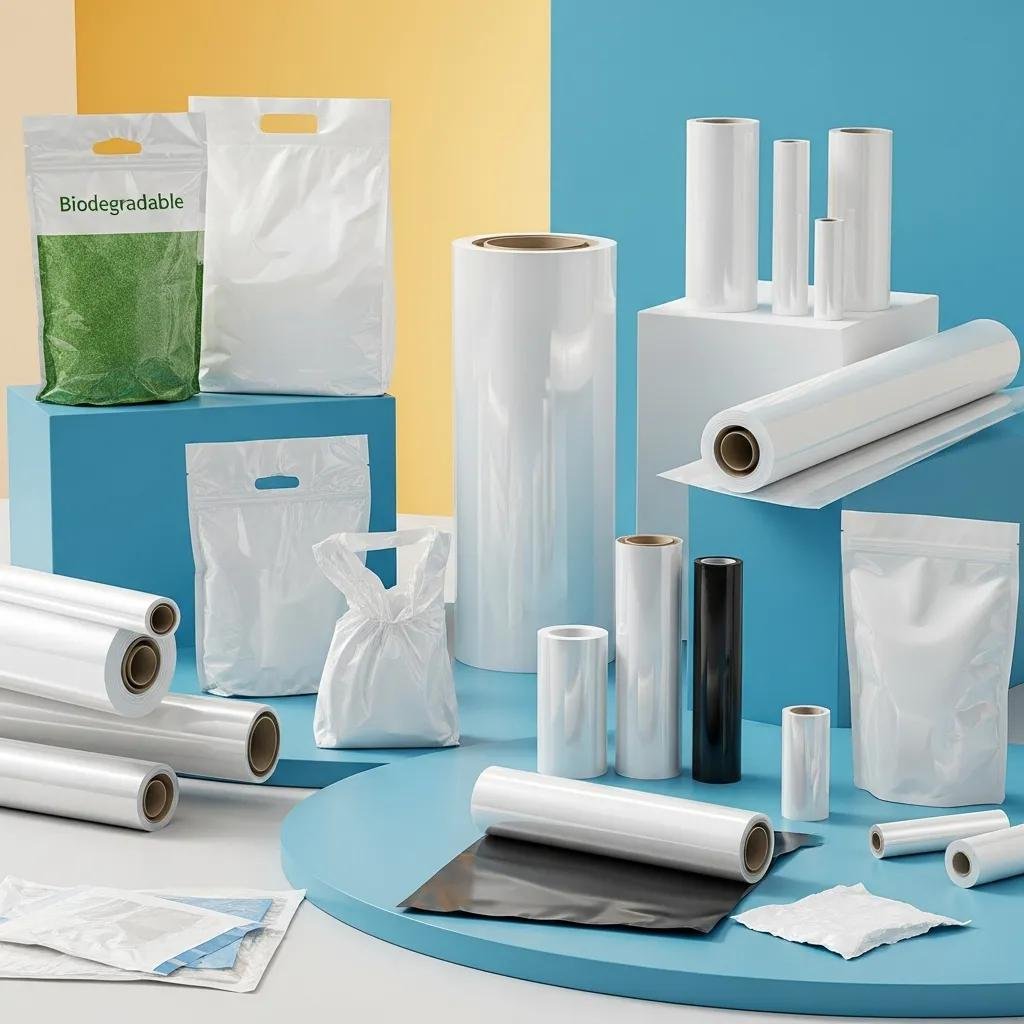
The global plastic film and bag market is undergoing rapid transformation between 2025 and 2030 driven by sustainability mandates, e-commerce expansion, and advances in extrusion and multilayer technology. This article explains current market size and growth projections, examines how circular-economy policies and extended producer responsibility (EPR) reshape material selection and design, and outlines which materials and technologies are leading innovation. Readers will gain actionable insight into application-specific demand from e-commerce, food, healthcare and industrial sectors, plus regional differences that affect sourcing and investment decisions. We also analyze emerging material trends such as bioplastics and high-barrier films, and describe how smart manufacturing and AI improve film extrusion productivity and quality. Finally, practical guidance is provided for machinery buyers and operations planners considering investments in blown film extrusion, bag-making and recycling equipment.
The current global plastic film market is large and segmented, driven by polyethylene-based films for packaging, industrial and agricultural uses; demand growth is tied to e-commerce packaging and food-grade barrier applications. Market dynamics show moderate compound annual growth driven by packaging replacement cycles, rising unit volumes for e-commerce parcels, and incremental uptake of specialty films, with risk from regulatory shifts and feedstock volatility. This section summarizes headline numbers, key drivers, and provides a comparative EAV-style table for quick reference to the films and bags segments. Understanding the relative scale of films versus bags helps manufacturers prioritize capacity, materials and downstream converting equipment.
This table summarizes recent 2024 baseline and medium-term projections used by market analysts for the film and bag segments:
This EAV-style snapshot demonstrates that film demand remains the dominant volume segment while bags show faster unit-growth in e-commerce niches. The next paragraphs drill into film evolution and bag-specific growth drivers.
The plastic film segment is expected to grow steadily through 2030 with material mix shifts toward higher-value, multi-layer and high-barrier films for food and medical packaging. Demand for films incorporating post-consumer recycled (PCR) content and for mono-material recyclable laminates will increase because of EPR and brand sustainability targets. Advances in blown and cast extrusion, along with inline coating or lamination, will enable more complex functional films without sacrificing throughput. Manufacturers should expect incremental margin pressure on commodity films while specialty films deliver higher returns, incentivizing investment in flexible multilayer lines.
Plastic bag demand is propelled by e-commerce parcelization, retail packaging convenience, and urban consumption patterns that favor lightweight, protective packaging solutions. Growth drivers include increased parcel shipments per capita, the need for cost-efficient protective cushioning, and demand for branded, printed packaging as retailers compete on unboxing experiences. Regional consumption variations and regulatory actions will re-shape product types — for example, growth in reusable-style bags or biodegradable options in regulated markets. Producers must balance speed, inline printing capability, and material cost to capture expanding bag opportunities.
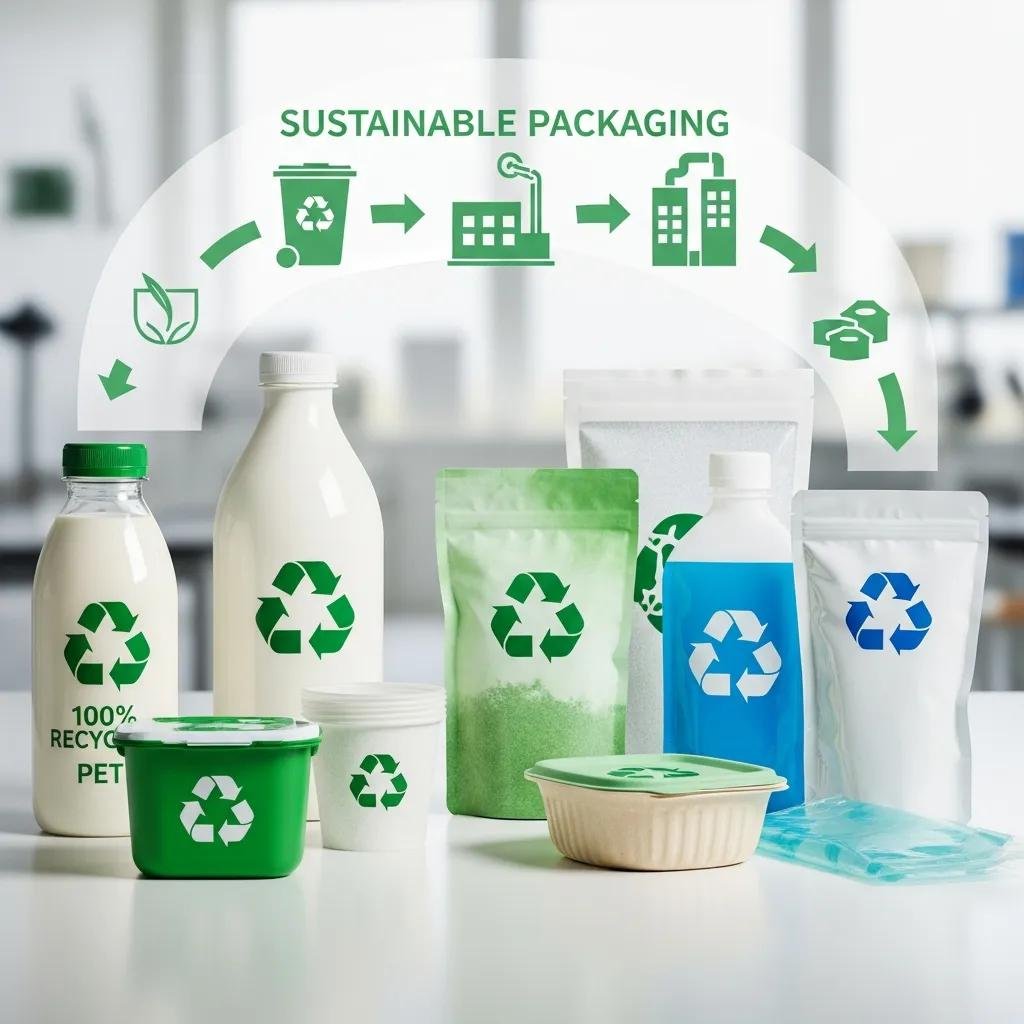
Sustainability and circular-economy policies are changing product design, material selection and supply-chain responsibilities by emphasizing recyclability, PCR content, and lifecycle accountability through mechanisms such as extended producer responsibility (EPR). These drivers force manufacturers and brands to prefer mono-material constructions, invest in recycling-compatible adhesives and compatibilizers, and capture cost externalities through EPR fees that affect product economics. Machinery and processing constraints also shift: lines must handle variable PCR blends, tolerate contamination levels, and maintain film properties while reducing energy, scrap and waste.
Recent innovations and process changes are enabling circularity in packaging while influencing capital investment decisions. Below is a concise list of the top sustainability impacts on the industry to help operations teams prioritize actions.
Sustainability is changing packaging in three primary ways:
These shifts mean manufacturers must align material choices and production methods with regulatory and brand requirements while preserving product performance and cost-effectiveness.
Kingdom Machine Co., Ltd. (also known as China Evergreen Machinery Co., Ltd.; Eevergreen Machinery) offers practical equipment options oriented to these sustainability trends, including biodegradable bag making machines and plastic recycling machines designed to process recycled resins and reduce energy consumption. Their manufacturing portfolio also includes plastic bag making machines and blown film extrusion machines capable of running PCR blends and bioplastic resins while offering quality assurance and energy-efficient designs. For buyers evaluating circular-economy compliance, selecting machinery that supports PCR compatibility and reduced waste generation is a critical operational step.
Biodegradable polymers, mono-material barrier films, improved compatibilizers and chemical recycling pilots are collectively driving sustainable film and bag production. Biodegradable resins such as PLA or PBAT blends enable compostable products in specific waste streams but require careful control of extrusion temperatures and cooling to maintain film integrity. Mono-material high-barrier approaches—where barrier polymers are engineered into PE-compatible layers—simplify recycling streams compared to mixed-material laminates. Inline additives and compatibilizers improve the mechanical properties of PCR blends, allowing processors to meet film performance targets without reverting to virgin-only formulations.
These material innovations require updated processing controls and equipment capabilities, which include extruders with flexible screw designs, die-heads optimized for multilayer coextrusion, and enhanced cooling/winding systems. The ability to run these resins without excessive scrap links directly to equipment design choices and process control investment, underscoring why manufacturers must align R&D, procurement and operations.
Extended Producer Responsibility (EPR) places financial and operational accountability on producers for end-of-life waste management, altering cost structures and incentivizing recyclable packaging designs and take-back systems. Under EPR schemes, producers face fees tied to packaging type and recyclability, which accelerates adoption of mono-material films and PCR content to reduce fees and reputational risk. Regulatory heterogeneity across regions means companies must plan for multiple compliance regimes and invest in versatile manufacturing that can meet differing recyclability targets.
The practical industry response includes procurement of recycling and reprocessing equipment and retrofitting lines to accept PCR. Investment choices are often driven by total cost-of-ownership calculations that weigh EPR fees, material premiums, and capital spending for recycling lines. Firms that proactively adopt recyclable designs and integrate recycling processes can reduce lifecycle costs and align with brand sustainability commitments.
Materials leadership in film production remains with polyolefins—particularly polyethylene—while specialty polymers such as BOPP and PET serve high-barrier or high-clarity niches that require different processing. Technological progress centers on multilayer blown and cast film lines, advanced die heads, inline printing and lamination, and digital process control systems that lower scrap and energy use. Smart manufacturing and AI-driven controls optimize melt temperature, film thickness and winding tension to improve yield and reduce downtime, influencing procurement decisions for new lines.
Below is an EAV-style comparison of common film materials by performance and recyclability to guide material selection and process planning:
This table clarifies why PE dominates many volume markets but also where alternative materials add value for barrier, clarity or compostability. The next table compares machinery types and their suitability for these materials.
These machinery comparisons show trade-offs between throughput, layer complexity and material compatibility; selecting a production route depends on target film properties and required recyclability.
Kingdom Machine Co., Ltd. supplies blown film extrusion machines that are well suited to polyolefin films, offering features that support multilayer coextrusion, energy-efficient operation, and compatibility with recycled and bioplastic resins. When specifying new film lines, buyers should prioritize extruder configurations, die-head technology, and advanced control systems that permit tight thickness control and reduced scrap. Choosing equipment with documented energy-saving designs and robust R&D-backed process parameters helps manufacturers meet both sustainability and productivity targets.
Polyethylene (PE) dominates because it combines low cost, wide processability, and a broad range of grades—LDPE, LLDPE and HDPE—that map to specific film functions from cling to heavy-duty sacks. PE offers ease of extrusion, good mechanical properties for films, and established recycling streams in many regions, which supports circularity initiatives when mono-material designs are used. Its versatility makes PE the default for bags, stretch films, agricultural covers and many consumer packaging formats, enabling economies of scale that suppress costs compared with specialty polymers.
The dominance of PE drives equipment choices: extruders and die heads optimized for polyolefins yield high throughput and stability, while downstream converting must allow for high-speed winding and inline printing. Understanding where PE fits versus higher-barrier materials helps manufacturers decide whether to invest in multilayer capability or in separate lines for PET/BOPP applications.
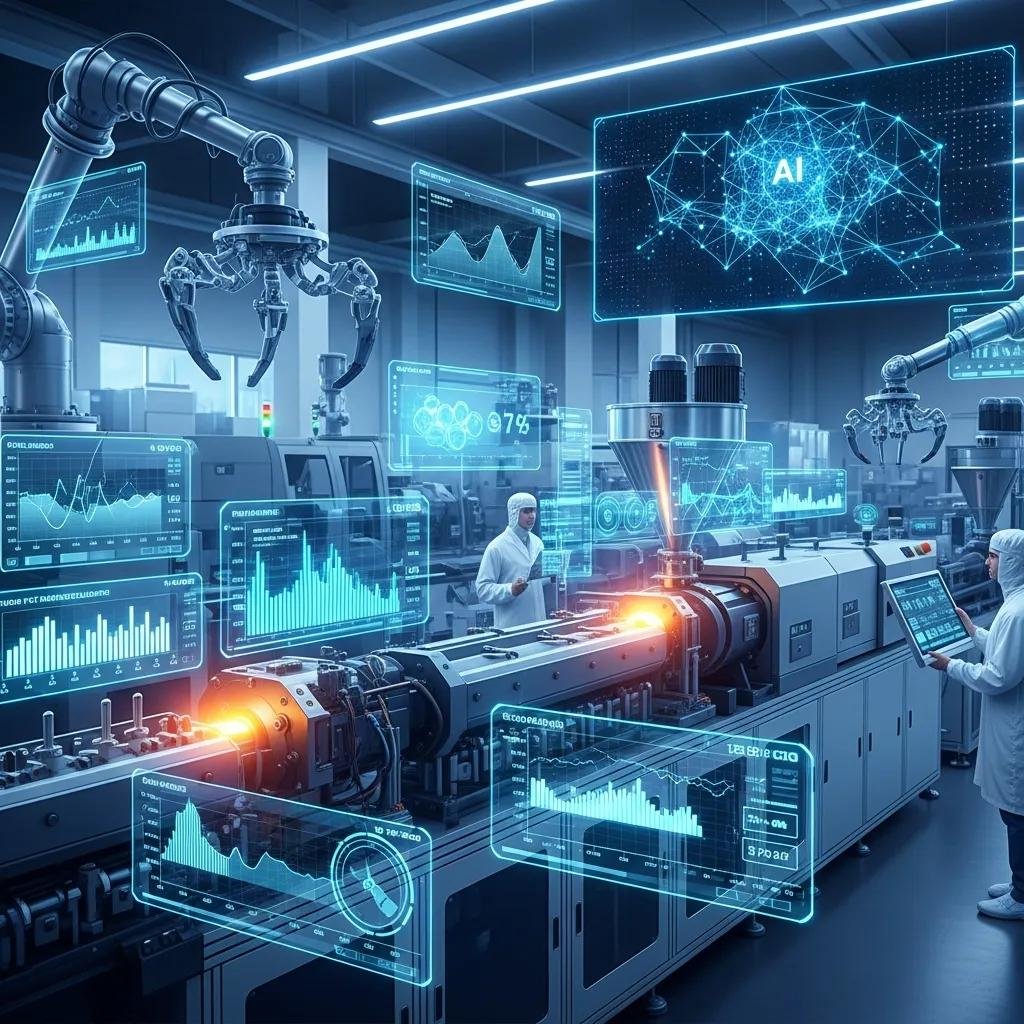
Smart manufacturing integrates sensors, closed-loop control and AI-based analytics to stabilize extrusion parameters, reduce scrap, and predict maintenance needs before failures occur. AI systems map relationships between screw speed, melt temperature and film thickness—enabling automated adjustments that keep film within tight tolerances and improve yield. Predictive maintenance models reduce unplanned downtime by signaling when bearings, heaters or drive components deviate from baseline performance, lowering total operating cost.
For procurement, the implication is clear: machines with integrated process control suites and data interfaces deliver operational advantages through higher first-pass yield and lower labor demands. Investing in AI-enabled control systems becomes a differentiator for manufacturers seeking consistent product quality and reduced lifecycle cost.
Application segments—e-commerce, food, healthcare and industrial packaging—each impose distinct material and machinery requirements that influence market demand and production strategies. E-commerce emphasizes strength, cushioning and branded printing; food requires barrier performance and regulatory compliance; healthcare demands sterility and traceability; industrial packaging prioritizes durability and cost-efficiency. Aligning film material choices and line capabilities with application requirements helps converters meet end-user specifications and regulatory audit demands.
Below is a focused list explaining how application needs translate into material and machinery priorities for producers and converters.
Application requirements translate into specific priorities:
Producers should map these application priorities to investment decisions, balancing capital intensity against margin opportunities in specialty segments.
Solutions & Machinery
For converters targeting these applications, relevant equipment categories include plastic bag making machines for high-throughput bag formats, flexo printing machines for inline branding, and high-barrier film lines for food and medical packaging. Plastic recycling machines also play a role where PCR content is required, enabling closed-loop material supply for applications sensitive to sustainability claims. Choosing the correct combination of blown film extrusion, printing and bag-making equipment determines operational flexibility and commercial responsiveness for specific market segments.
E-commerce growth increases package volumes and places a premium on lightweight, tear-resistant and protective films that reduce logistics cost while preserving item integrity. The demand profile favors films with higher puncture resistance, printable surfaces for branding and efficient laminates that add cushioning without excessive weight. Inline capabilities such as flexo printing and fast bag making help brands customize packaging at scale while keeping per-unit costs manageable. For manufacturers, e-commerce requirements often justify investments in higher-speed converting equipment and robust quality control systems that minimize returns due to packaging failures.
Food packaging prioritizes oxygen and moisture barrier performance, heat-seal integrity and compliance with food-contact regulations to ensure shelf life and safety. Healthcare packaging demands validated sterile barrier systems, traceability-oriented printing and materials that withstand sterilization processes. Industrial packaging favors robustness and cost-efficiency, with emphasis on tear strength and stackability for pallets and bulk shipments. Machinery specifications therefore differ: food and healthcare may need high-barrier multilayer lines with lamination and seal testing, whereas industrial film lines focus on throughput and mechanical property control.
Regional markets vary by manufacturing capacity, regulatory stringency, and technology adoption, shaping where production is concentrated and how products are specified. Asia Pacific (APAC) functions as a major manufacturing hub with integrated supply chains and cost advantages that support large-volume film and bag production. North America and Europe emphasize regulatory compliance, advanced materials adoption, and automation, prompting investments in high-specification equipment and recycling infrastructure. Emerging markets present growth opportunities but may require tailored cost-focused solutions and local partnerships to navigate logistics and standards.
Below is a concise regional comparison to capture the most salient differences for strategic planning.
Regional snapshot:
Asia Pacific serves as a global manufacturing center due to scale, vertically integrated supply chains, and a dense network of converters and OEMs that produce machinery and components. This concentration lowers capital and operational costs for many producers and enables rapid deployment of production capacity for export markets. APAC’s role also means regional machine builders and suppliers frequently innovate to support local material types and production models. For international buyers, APAC offers access to competitive equipment options and an ecosystem that supports spare parts and rapid service, though delivery and compliance considerations must be managed.
North America and Europe prioritize regulatory-driven packaging design, higher automation levels, and deployment of recycling infrastructure and advanced materials such as high-barrier mono-materials and PCR-enabled films. EPR programs and strict recyclability targets push converters to adopt new materials and invest in quality assurance and traceability systems. These markets also demand high-spec equipment with comprehensive process control and validation capabilities, influencing procurement toward lines that provide robust documentation, consistency and lower total cost of ownership through energy efficiency and predictive maintenance.
The future of plastic film manufacturing balances incremental demand growth with a rapid reallocation of investment toward recyclable solutions, high-barrier specialty films, and smart manufacturing that reduces scrap and energy use. Emerging material trends—bioplastics and engineered mono-material barriers—offer pathways to circularity when paired with compatible recycling systems, while AI and advanced process control increase operational efficiency. Major challenges include feedstock price volatility, regulatory fragmentation, and gaps in recycling infrastructure that limit PCR availability. Manufacturers who prioritize flexible lines, invest in recycling and choose energy-efficient designs will be better positioned to navigate uncertainty.
Key emerging trends and strategic recommendations are summarized in the list below to help decision-makers prioritize actions over the next five years.
Recommended strategic actions:
These actions target resilience against feedstock swings, regulatory pressure, and market demand for sustainable packaging, helping manufacturers maintain competitiveness.
Bioplastics are growing as brands seek compostable or lower-carbon alternatives in select applications, while high-barrier films continue to expand for food and pharmaceutical packaging where shelf-life is critical. Bioplastic adoption remains niche due to cost and end-of-life infrastructure constraints, but incremental CAGR growth is expected for compostable films in regulated streams. High-barrier films, often using PET or metallized layers, retain strong demand for perishable foods and sterile medical products, and innovations in mono-material barrier technology aim to deliver similar performance with easier recyclability.
Manufacturers are retrofitting existing lines to accept PCR, investing in plastic recycling machines to secure feedstock, and procuring energy-efficient extruders that reduce running costs and emissions. Other adaptations include developing compatibilization processes to blend PCR with virgin resins while maintaining mechanical and barrier properties, and adopting modular equipment that supports quick changeovers between material types. These strategies reduce exposure to regulatory and supply-chain risk while enabling brands to meet sustainability targets and consumer expectations for recyclable packaging.
Kingdom Machine Co., Ltd. is positioned as a supplier of relevant machinery across these needs, offering blown film extrusion machines, plastic bag making machines, flexo printing machines and plastic recycling machines that address recyclability, energy efficiency and production flexibility. Their one-stop service and production capabilities support converters seeking integrated lines that reduce installation complexity and improve time-to-production. For buyers evaluating equipment, specifying machines with proven PCR handling, low-energy operation and robust service networks helps align capital investments with long-term sustainability and performance goals.
Elevate your machinery performance with our premium spare parts and components. Trust in our quality and reliability for optimal operation and longevity.
Maximize efficiency with expert installation for your plastic production machines. Our professional team ensures optimal performance tailored to your needs.

Transform your concepts into reality with our tailored installation solutions. Experience professional guidance and exceptional results designed just for you.

Elevate your production with essential tips for selecting the right plastic bag making equipment. Make informed choices for efficiency and quality today.
