

Reliable Spare Parts and Components for Your Machines
Elevate your machinery performance with our premium spare parts and components. Trust in our quality and reliability for optimal operation and longevity.
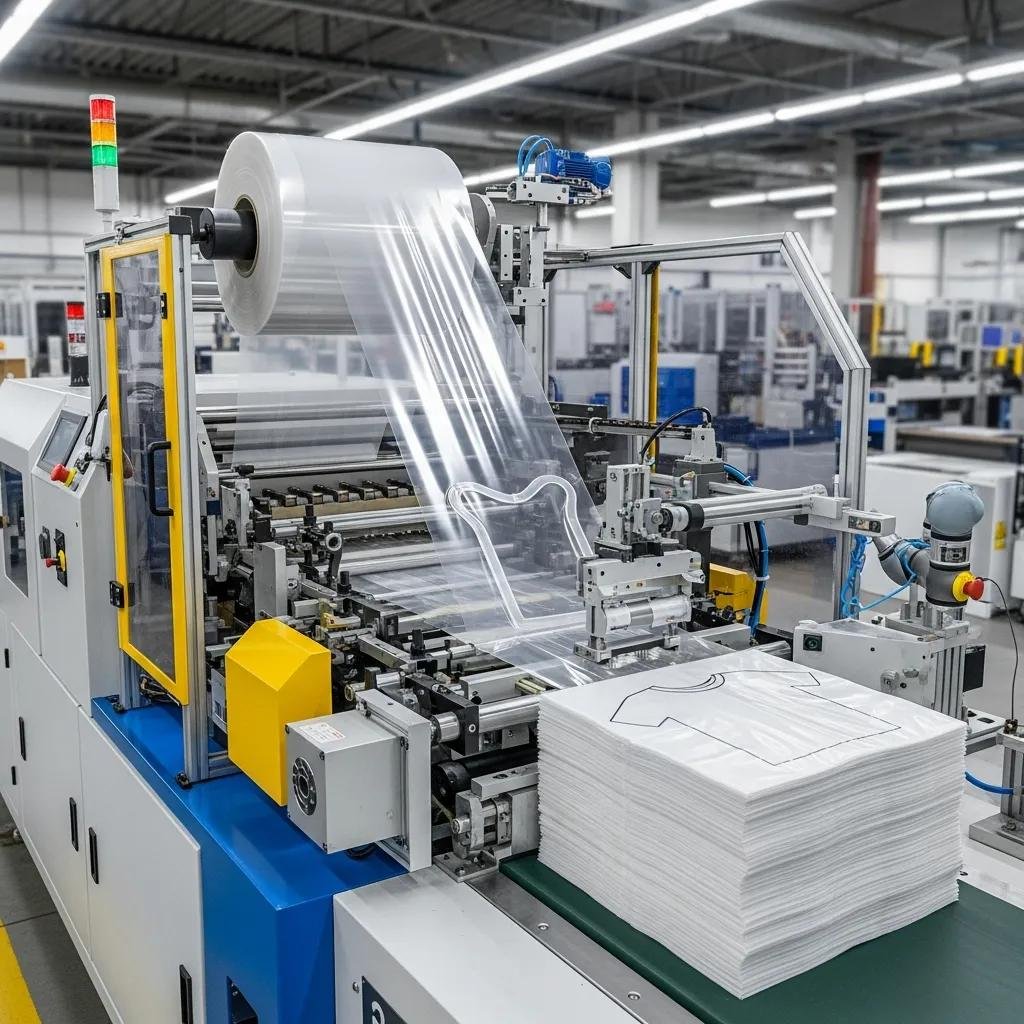
T-shirt bag making machines convert rolled film into finished vest-style bags using automated cutting, punching, and sealing processes to produce high volumes of retail and carry bags. This article explains the core technologies that define high-speed automatic lines, the price drivers that shape competitive offers in the South African market, and the operational benefits buyers can expect when choosing the right machine class. Many converters and new entrants face uncertainty about upfront cost versus total cost of ownership; this guide compares automation levels, material compatibility (including biodegradable films), and real-world maintenance needs so you can evaluate ROI. We will map key machine features, show indicative price bands for semi-automatic, fully automatic, and biodegradable-capable lines, outline which industries benefit most in South Africa, and present practical maintenance and ROI calculations. Throughout, related equipment such as blown film extrusion, flexo printing, and plastic recycling machines are referenced to help buyers design complete production workflows.
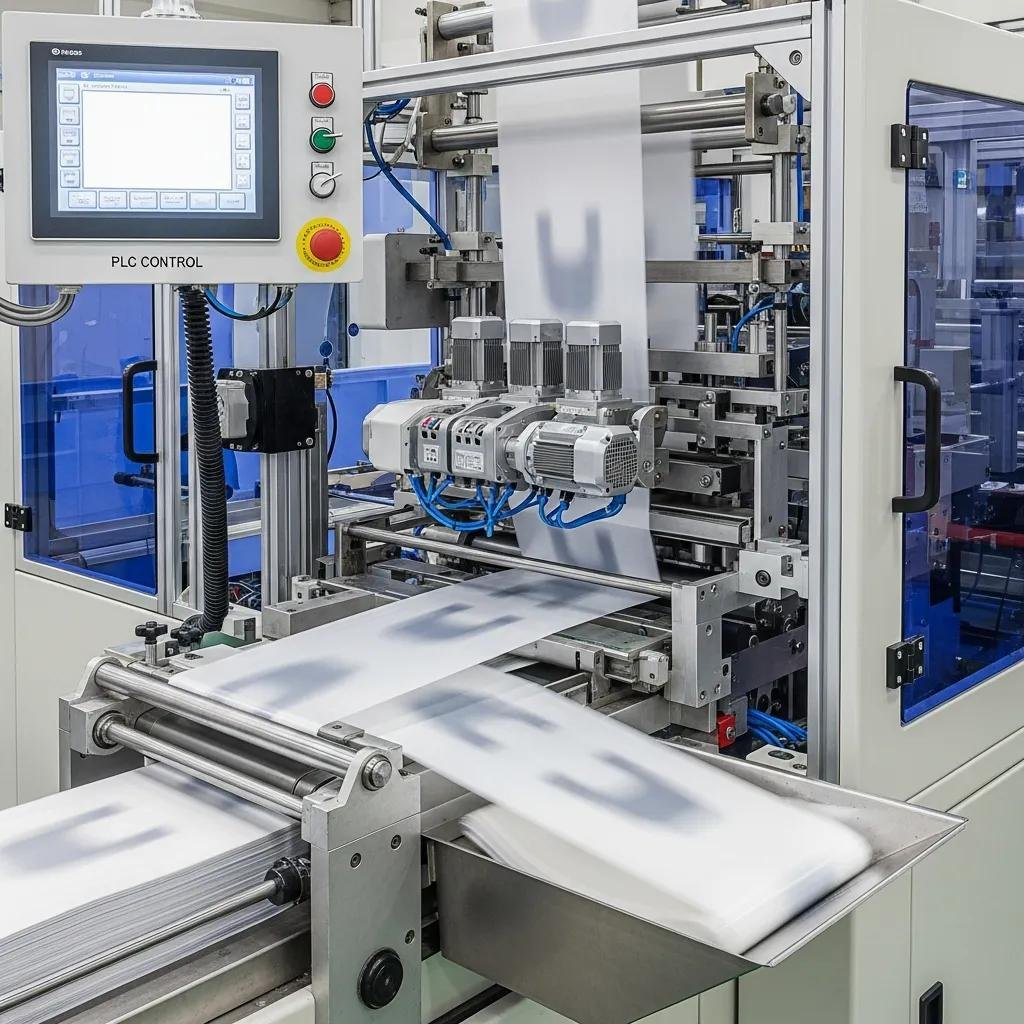
High-speed automatic T-shirt bag making machines combine precision motion control, automated tooling, and integrated handling to convert blown or cast film into finished bags at high throughput. These systems use PLC-driven sequence control and servo motor assemblies to manage film feeding, cutting length, punching, and stacking with consistent accuracy, reducing labour and scrap. The result is predictable bag dimensions, stable seal quality, and faster changeovers—benefits that translate into lower per-bag production costs and improved shelf-ready quality for retail customers. Understanding these technical features helps buyers match machine specifications to production targets and film types before requesting quotes.
PLC control systems manage operation sequences and recipe memory, enabling repeatable production runs and rapid changeovers between bag sizes. Servo motors provide precise length control and synchronized punching, which reduces film waste and maintains consistent bag formation; this precision increases uptime and yields. Tension control and automatic film unwinding systems stabilize film delivery, preventing wrinkles and misfeeds during high-speed runs. These technologies—PLC, servo drives, tension systems, and automated tooling—work together to raise throughput while lowering defect rates, making them essential choices for high-volume converters.
PLC and HMI-Based Automatic Bagging Machine for Improved Production Efficiency
To address the inefficiencies, labor-intensive nature, inconsistent quality, and other drawbacks of traditional manual bag production, the authors developed a prototype of a double-position automatic bagging machine utilizing Omron PLC and HMI. Considering both industrial site requirements and experimental analysis, the authors propose a novel double-position operating mode. The control strategy for the bagging machine is analyzed, discussing not only the hardware system’s control methods but also introducing the control system’s software. Employing a PLC as the core controller ensures accuracy, stability, and real-time performance for site control, while also offering good scalability and portability. A closed-loop control system is formed by incorporating a servo encoder feedback loop, achieving precise and stable system control. Practical operational results demonstrate that the machine exhibits high reliability, a user-friendly man-machine interface, significantly enhances bagging efficiency, reduces labor intensity, and possesses broad market potential.
Design and research of double-position automatic bagging machine based on PLC and HMI, 2014
The integration of PLC and HMI systems is crucial for achieving high levels of automation and efficiency in modern bag making machinery, as demonstrated by research into advanced control strategies.
T-shirt bag machines are compatible with a range of blown or cast films including HDPE and LDPE for conventional bags and biodegradable films such as PBAT, PLA, and PVA for eco-friendly options. Biodegradable films often require adjusted temperature profiles, gentler tension control, and testing to avoid overheating or brittleness; machines with flexible temperature and servo control handle these materials better. Film thickness typically ranges from thin retail weights up to heavier gauge sacks, so specifying film width, thickness, and additive content to a supplier improves commissioning speed. When switching materials, run short validation batches to confirm seal integrity and punching performance before ramping to full production.
Different machine features deliver distinct operational benefits and measurable impacts on yield and quality.
Competitive pricing in the South African T-shirt bag machine market balances lower upfront capital against the total cost of ownership, which includes uptime, spare parts, energy, and service. A competitive price offer typically reflects optimized manufacturing scale, efficient supply chains, and standardized configurations that reduce customization costs; however, buyers should evaluate warranty terms, QC processes, and delivery timelines alongside headline price. Local import factors—shipping, tariffs, and freight handling—also materially affect landed cost and should be included in comparative quotes. To secure a meaningful comparison, request detailed line-item quotes that separate machine base price, optional modules (printing, servo upgrades), installation, and training.
Understanding how each factor shifts operating expense helps buyers prioritize features that lower long-term cost rather than focusing only on purchase price. The next section shows how suppliers convert those factors into indicative price bands and practical comparisons.
Machine class, control systems, motor types, tooling complexity, and print integration are primary drivers of price; each upgrade increases capability and often productivity. Shipping, installation, and on-site training add to the landed cost, especially for international suppliers serving South Africa. Optional features—such as multi-layer film handling, flexo printing stations, or advanced servo packages—create price tiers that suit small converters up to industrial packaging houses. Buyers should request clear specifications for production speed (bags/min), film width and thickness limits, inclusion of spare parts and tooling, and warranty scope to compare offers transparently.
These cost components map directly to value: higher automation typically increases uptime and reduces labour, offsetting CAPEX over the machine lifetime. Evaluating these trade-offs supports a total-cost decision rather than a lowest-upfront-price choice.
Plastic Bag Machine South Africa (operating as Kingdom Machinery Co., Ltd.) presents explicit competitive-pricing claims grounded in production scale and quality processes that reduce unit costs for buyers. The supplier cites competitive prices achieved through large-scale production and trained workers, paired with quality assurance measures including 100 percent final inspection and a controlled defective rate between 1% and 3%. Warranty and R&D details are also specified: a two-year warranty on timer switches and support from a multidisciplinary R&D team (product, structural, software, circuit engineers). Delivery and service terms aim to shorten procurement cycles, with samples reportedly available within 3 days and standard bulk deliveries within 15–20 days for listed machines. These proof points demonstrate how pricing advantages can be defended by workmanship, testing, and predictable lead times.
If you want a tailored cost comparison, request a formal quote that itemizes machine scope, lead time, and warranty terms so you can compare total landed cost across suppliers.
Buyers typically see distinct price bands for semi-automatic, fully automatic, and biodegradable-capable machines driven by automation, speed, and material handling requirements. Semi-automatic machines are positioned for small-batch production with lower throughput and simpler controls; fully automatic machines offer multi-mode automation, higher speeds, and integrated tooling; biodegradable-capable machines include additional sensors and control flexibility to handle sensitive film chemistries. When comparing price bands, consider what is included—installation, training, basic tooling—and which optional modules are priced separately. For accurate procurement, contact suppliers for tailored quotations that reflect your film choice and planned output.
This comparison clarifies how features map to price tiers; for exact figures and financing options request a formal quote that lists inclusions and delivery timelines. In many cases, suppliers will also advise on necessary upstream equipment such as blown film extrusion or flexo printing to achieve a complete production line.
Fully automatic machines command higher upfront investment because they integrate servo-driven motion, advanced PLC recipes, automatic stacking, and optional inline printing. Buyers receive higher throughput, reduced labour per bag, and tighter quality control in exchange for the premium. Typical procurement packages often include installation and commissioning, operator training, and baseline tooling; optional items such as flexo printing stations or multi-layer film handling are priced extra. When considering fully automatic equipment, evaluate expected utilisation, payback period from labour savings, and spare-parts access as part of the purchasing decision.
Higher-tier models are appropriate when output targets and print/branding requirements justify the CAPEX; otherwise a mid-range fully automatic model often balances cost and capability for many converters.
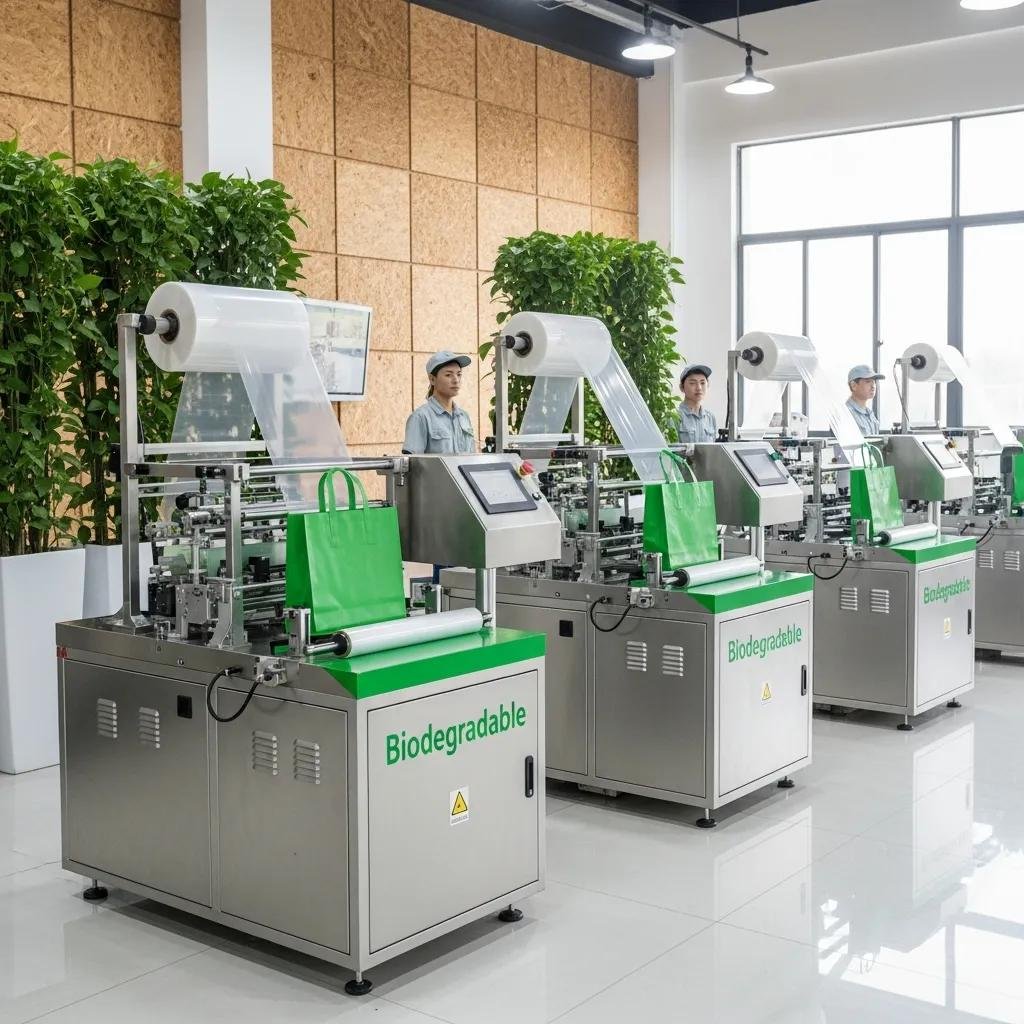
Machines set up to process biodegradable films can carry a modest to significant premium depending on required process controls and sensor suites. The technical reasons for higher cost include the need for finer temperature control, gentler web handling to prevent film stress, and extra testing during commissioning to validate seal and tensile properties. Production speeds may be lower with some biodegradable formulations, so buyers should calculate per-bag cost at realistic throughput rather than nameplate capacity. Evaluate market demand for eco-friendly bags and regulatory drivers against the premium to determine if biodegradable-capable equipment is a sound investment for your operation.
Request supplier guidance on recommended film grades (PBAT, PLA, PVA), expected throughput with those films, and any additional tooling that influences the final quote.
T-shirt bag making machines serve a range of markets in South Africa where high-volume, low-cost packaging is required, particularly retail and grocery sectors. Supermarkets and national retail chains require high-throughput production, consistent bag strength, and reliable print/branding options for store identity. Convenience stores and small retail outlets value quick changeovers and small-batch flexibility to match local demand. E-commerce and specialist packers seek customized sizes and protective features that may require additional equipment like laminators or flexo printing lines.
These application profiles guide machine selection: supermarkets typically invest in higher-speed fully automatic lines with printing, while convenience-store suppliers prioritize semi-automatic or modular systems for flexibility. The next subsection details typical supermarket needs and how machines meet them.
Supermarkets demand consistent bag strength, high throughput, and often flexo printing for store branding; they normally specify bag thickness, handle type, and print registration accuracy to meet front-end service standards. High-speed automatic lines with integrated printing and auto-stacking reduce labour and ensure consistent output across multi-store rollouts. For multi-store chains, standardizing machine configurations and specifying spare-part kits simplifies maintenance and logistics. When planning a roll-out, buyers should include spare tooling, operator training, and inventory strategies to minimize interruptions.
Supermarkets benefit most when machines are paired with a predictable service plan and spare-parts availability to sustain uninterrupted supply to stores.
Convenience stores typically require small to medium production runs with frequent changeovers and low operator overhead, making compact semi-automatic or modular automatic lines attractive. E-commerce packaging focuses on customizable bag sizes, protective strength, and occasional printed branding; integrating printing or lamination upstream improves final product utility. Both segments often prioritize agility—fast sample turnaround and short lead times—so suppliers who can provide rapid samples and clear commissioning plans reduce time-to-market. Buyers should assess changeover time, tooling cost, and print flexibility when selecting equipment for these markets.
Configurations that allow quick die changes and recipe memory for common SKUs deliver the best operational fit for convenience and e-commerce applications.
Plastic Bag Machine South Africa (operating as Kingdom Machinery Co., Ltd.) positions itself with several explicit value propositions intended to reduce buyer risk and procurement lead time. The company highlights competitive prices achieved through large-scale production and trained workers, which can lower unit machine costs for purchasers. Quality assurance is emphasized with claims of 100 percent final inspection and a controlled defective rate between 1% and 3%, while warranty coverage includes a two-year warranty on timer switches. The supplier also promotes a strong R&D team spanning product, structural, software, and circuit engineering, plus one-stop services including customization for logo, label, packaging, and new product development. Fast delivery terms are listed—samples within 3 days and bulk orders within 15–20 days for standard machines—and the company cites a track record of 1700+ machines installed worldwide across more than 100 countries.
These proof points address procurement concerns around price justification, quality control, and lead-time predictability, helping buyers narrow shortlists for formal quotes.
The supplier’s stated UVPs focus on production scale, quality control, warranty, R&D breadth, and customization services to support varied customer needs. Competitive pricing is attributed to large-scale manufacturing and experienced staff, enabling lower baseline costs for commodity machine classes. Quality control claims—100 percent final inspection and a defective rate between 1% and 3%—aim to reassure buyers about delivered machine reliability. Warranty coverage (two years on timer switches) and a multidisciplinary R&D team are presented to support technical confidence during customization and commissioning. Fast sample and bulk delivery timelines are cited to shorten procurement cycles and ramp-up.
These points help buyers evaluate how supplier capabilities translate into lower total ownership risk when comparing quotes.
Local support reduces downtime by shortening spare-part lead times and enabling on-site commissioning, training, and troubleshooting—critical factors for South African operations. On-site installation and operator training accelerate production ramp-up and transfer tacit knowledge to local teams. Prospective buyers should ask suppliers about spare-parts inventory, recommended spares, and the existence of local or regional service partners to confirm response times. Verifying these support touchpoints during the quotation phase clarifies expected lifecycle support and helps estimate operating costs tied to downtime.
Confirming service arrangements during procurement ensures faster recovery from faults and better long-term equipment performance.
A structured maintenance and optimization program preserves uptime and reduces lifecycle costs, directly improving ROI for bag-making equipment. Regular preventive tasks—daily inspections, lubrication, and quick checks on tension and cutter alignment—prevent production losses and keep defect rates low. Optimization practices such as fine-tuning servo parameters, minimizing scrap through proper film handling, and scheduling predictive maintenance based on runtime data increase effective production hours. Combining a maintenance schedule with a simple ROI model clarifies payback timelines and investment prioritization for upgrades such as printing modules or servo packages.
The following checklist and maintenance table provide practical actions and expected impacts to guide operations teams.
Best practice starts with a daily checklist covering film alignment, cutter condition, and safety interlocks, followed by scheduled lubrication and inspection intervals to address wear items proactively. Maintain a recommended spare-parts kit—cutters, belts, sensors, and essential fasteners—to reduce mean time to repair; track parts usage to anticipate reorder points. Use runtime and fault log analysis to identify recurring issues that benefit from preventive action or minor retrofits. Training operators on quick corrective actions and proper handling reduces human-error stoppages and ensures consistent quality.
Implementing these practices stabilizes production and creates a data-driven maintenance rhythm that informs long-term procurement and spare-part planning.
A simple annualized ROI formula is: (Annual net benefit from machine) ÷ (Total investment) = ROI. Inputs include purchase price + installation as CAPEX, annual operating costs (energy, labor, maintenance), and annual net benefit (revenue from sold bags minus variable costs or labour savings compared to manual processes). For example, estimate annual production × margin per bag to calculate added revenue, subtract operating expenses to get net benefit, then divide by total investment to derive ROI and compute payback period in years. Sensitivity testing on price per bag and utilisation rate clarifies how slower uptake or higher material costs affect payback.
This approach helps management compare machine options objectively and decide which automation level provides the best long-term value for their production targets.
Plastic Bag Machine South Africa (operating as Kingdom Machinery Co., Ltd.) positions itself to support lead generation by offering competitive pricing through scale, comprehensive quality assurance, defined warranty terms, R&D support, customization, and accelerated delivery for both samples and bulk orders. For a tailored quote that reflects your film choice, speed requirements, and required options, request a formal quotation from the supplier that itemizes inclusions, lead times, and warranty details so you can compare total landed cost and expected ROI.
T-Ceres: An Automated System for Converting T-Shirts into Reusable Carry Bags
Carry bags represent a ubiquitous utility in contemporary life, with a significant proportion manufactured from plastic. India alone generates an estimated 25,940 tons of plastic waste daily, contributing to environmental degradation through pollution and posing threats to marine ecosystems due to improper disposal. While cloth bags offer an alternative, the environmental toll of manufacturing a single cloth bag is equivalent to that of 104 plastic bags. Consequently, there is a pressing need for an innovative system or invention that satisfies consumer demand while mitigating environmental impact. To address these issues, T-Ceres, our proposed solution, facilitates the conversion of used T-shirts into reusable cloth bags. This automated machine operates by stitching the base of the T-shirt, excising the sleeves, and widening the neckline to transform it into a carry bag. This process extends the lifespan of the textile, thereby reducing waste and the environmental harm associated with fast fashion, while simultaneously obviating the need for manufacturing new cloth bags and replacing single-use plastic bags in the current market.
T-Ceres—An Automated Machine for Any T-Shirt to Bag Conversion, S Premkumar, 2022
The broader context of bag production, including the environmental impact of plastic and the innovative repurposing of materials, highlights the importance of efficient and sustainable manufacturing solutions.
Elevate your machinery performance with our premium spare parts and components. Trust in our quality and reliability for optimal operation and longevity.
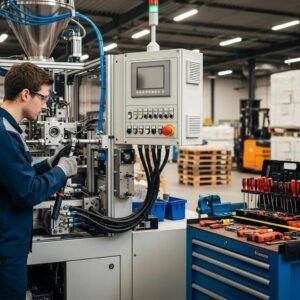
Maximize efficiency with expert installation for your plastic production machines. Our professional team ensures optimal performance tailored to your needs.

Transform your concepts into reality with our tailored installation solutions. Experience professional guidance and exceptional results designed just for you.

Elevate your production with essential tips for selecting the right plastic bag making equipment. Make informed choices for efficiency and quality today.
