

Reliable Spare Parts and Components for Your Machines
Elevate your machinery performance with our premium spare parts and components. Trust in our quality and reliability for optimal operation and longevity.
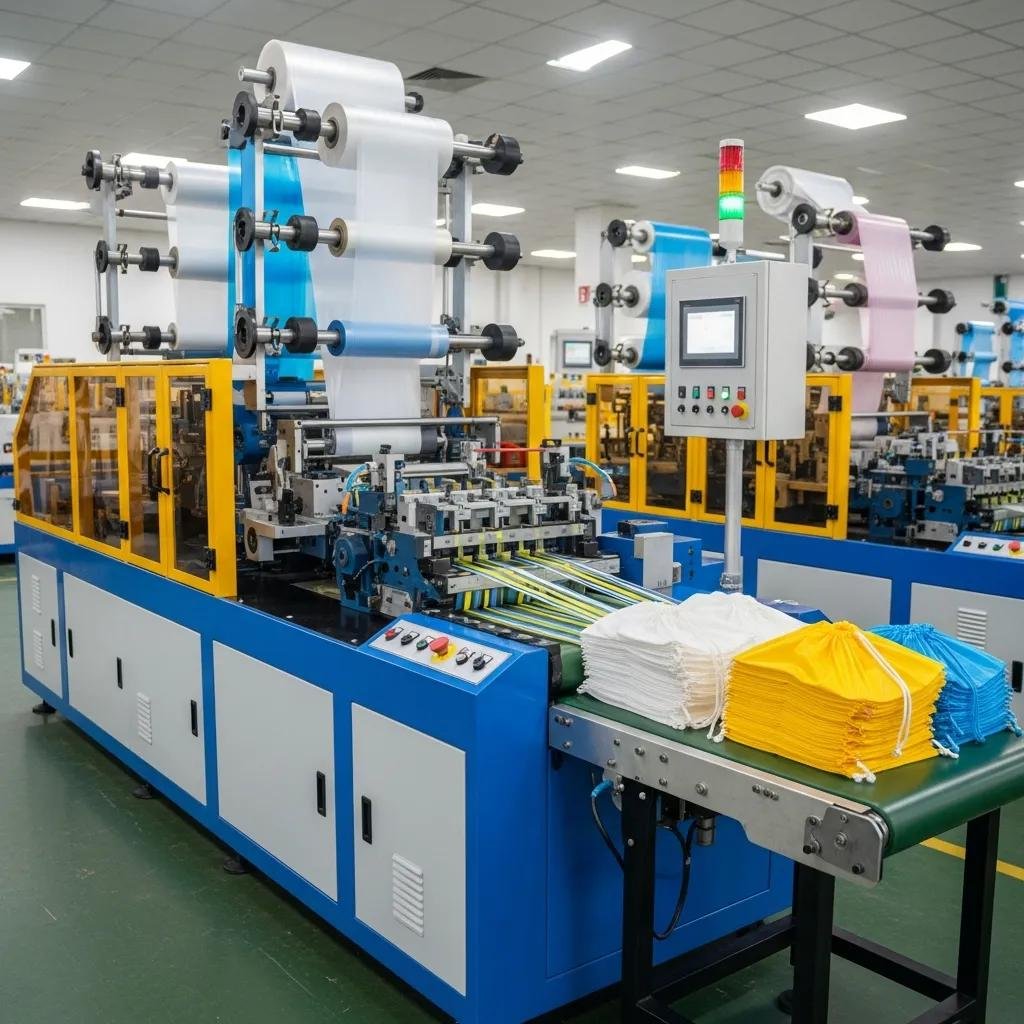
Drawstring bag making machines are specialized packaging systems that convert film into finished drawstring bags with high consistency, speed, and minimal operator intervention. These machines integrate film handling, drawtape insertion, sealing, perforation, and cutting to produce retail and laundry drawstring bags efficiently, reducing labor costs and improving packaging quality. This guide explains how automatic plastic drawstring bag equipment works, which technologies improve throughput and reliability, and how blown film extrusion supplies the film feedstock essential for consistent bag strength. Readers will learn step-by-step production workflows, customization options for diverse production needs, and the sustainability implications of biodegradable drawstring bag production. Practical application examples for retail packaging and commercial laundry services are provided, along with guidance on vendor selection and after-sales support considerations. The next section defines machine types and core features buyers evaluate when selecting drawstring bag equipment for retail and laundry operations.
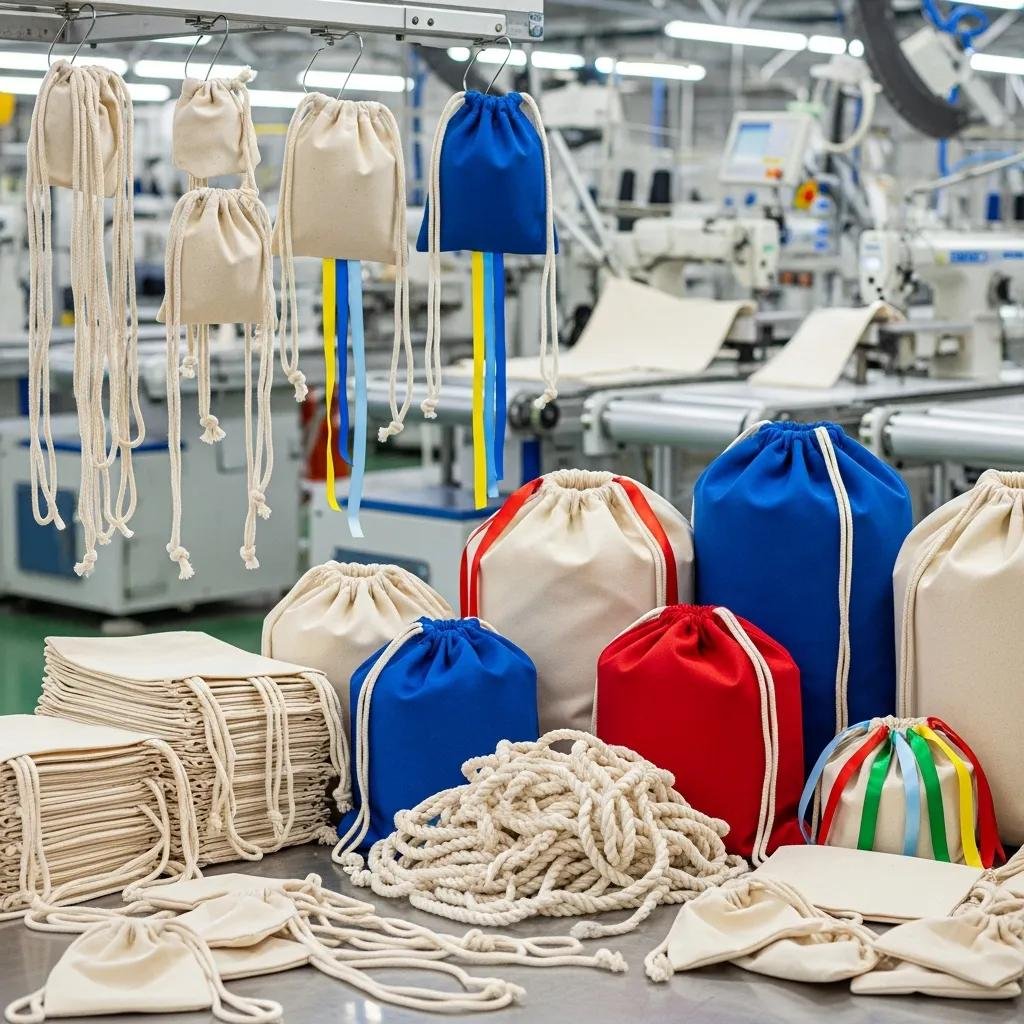
Drawstring bag making machines are production systems that transform rolled plastic film into sealed bags equipped with drawstrings or drawtapes, enabling easy closure and transport for retail and laundry applications. They work by unwinding film, aligning and inserting drawtape, applying a sealing method, adding perforations if required, and cutting or folding bags onto rolls or stacks to match downstream packaging needs. Core features that determine performance include servo-driven motion and PLC control for precision, modular drawtape insertion units for consistent placement, and automated film handling for minimal downtime. Buyers also evaluate production capacity (bags per minute), material compatibility (HDPE/LDPE and biodegradable blends), and maintenance access for cleaning and part replacement. Understanding these features helps purchasers match machine capabilities—such as automation level and control systems—to their target bag sizes and throughput requirements, which leads directly into operational workflows in retail and laundry settings.
These variants illuminate how technology choices shape machine selection and set the stage for discussing specific operation patterns in retail and laundry environments.
Intro to feature comparison table: the table below summarizes typical machine attributes buyers compare when shortlisting equipment.
This comparison highlights component-level differences that determine machine suitability for specific production goals. The next subsection explains how these systems operate within retail and laundry workflows.
Automatic drawstring bag machines operate by following a linear workflow: film unwinds, drawtape feeds and aligns, sealing and perforation occur, and the finished bag is separated and collected or rolled. In retail settings, machines often run narrow-gauge film with integrated flexo printing upstream and produce bags on roll for secondary packing, while laundry systems typically produce larger, heavier-gauge bags that may be stacked or packaged in bulk for institutional users. Typical throughput examples range from moderate speeds suitable for custom-printed retail batches (around 50–150 bags per minute) to high-speed continuous lines for disposable laundry bags (up to 300 bags per minute), with line configuration dictated by bag dimensions and material properties. Operational considerations include film tension control, drawtape feed accuracy, and seam integrity testing to ensure bags meet handling requirements in hotels or stores. Understanding these operational differences leads into the specific technologies that improve machine efficiency and reliability.
Modern drawstring baggers employ servo motors, PLC touch-screen interfaces, automated splicing, and energy-efficient components that together increase uptime and reduce waste. Servo-driven systems enable precise indexing and repeatable sealing cycles, while PLC-based recipe storage simplifies changeovers between bag sizes and materials. Automated film splicing and web-guidance reduce manual interventions during roll changes, and fault detection systems minimize scrap by halting production on deviations in tape placement or seal quality. Maintenance-friendly designs with quick-access service panels and modular tooling reduce mean time to repair, which supports higher overall equipment effectiveness. These technologies combine to lower energy consumption, improve consistency, and shorten changeover times—preparing readers to follow the end-to-end manufacturing process from film extrusion through bag finishing.
The plastic drawstring bag manufacturing process converts resin into film, then into finished bags through a sequence of controlled steps that ensure dimensional accuracy and mechanical strength. Key stages include blown film extrusion to produce the film roll, film winding and storage, film unwinding onto the bagger, drawtape insertion, sealing and perforation, cutting or roll formation, and final packaging. Each stage requires specific equipment and parameter control—film gauge, line speed, temperature profiles, and tape tension—to maintain consistent bag quality. Below is a numbered step summary that outlines the typical production sequence for featured-snippet clarity and quick reference.
This stepwise breakdown clarifies how upstream extrusion parameters affect downstream bagger performance and transitions directly to the role blown film extrusion plays in the overall quality chain.
Intro to process mapping table: the following table links each major process step to typical equipment and expected outputs for pragmatic planning.
This mapping helps production planners identify equipment interfaces and expected outputs at each stage. The next subsection explains blown film extrusion’s direct influence on drawstring bag properties.
Blown film extrusion is the upstream process that creates the polymer film used by drawstring bag machines; film gauge, homogeneity, and mechanical properties determined at extrusion directly influence bag strength and sealing behavior. Selecting HDPE, LDPE, or biodegradable blends affects tensile strength, elongation, and sealability, which in turn inform sealing temperatures and cycle times on the bagger. Extrusion parameters such as die gap, frost line height, cooling rate, and tentering (if used) determine film clarity, thickness variation, and bubble stability; tighter control reduces downstream adjustments and scrap. For operations requiring printed retail bags, film surface properties must be suitable for flexo or gravure printing, which can be managed by extrusion additives or surface treatments. Recognizing the relationship between extrusion settings and downstream bagging requirements prepares manufacturers to optimize both processes jointly.
Sealing, perforation, and drawtape insertion are finishing operations executed with dedicated modules that must synchronize precisely with web speed and tape feed to ensure consistent bag functionality and appearance. Sealing is typically performed using heat-seal bars for PE films or ultrasonic sealing for faster cycles and thicker materials; choice depends on material compatibility and desired seam aesthetics. Perforation stations can create single or multi-line tear strips or ventilation holes, and their placement is coordinated through servo indexing to maintain registration across prints. Drawtape insertion uses guided rollers, clamping jaws, or tuck-in mechanisms depending on tape type and bag design, and tension controls prevent misfeeds or wrinkling. Quality control measures—such as seam tensile tests and visual inspection—are implemented inline or offline to verify adhesion and alignment, which leads into application-specific machine recommendations.
Drawstring bag machines address a variety of packaging needs across retail and laundry sectors by producing bags that combine convenient closure with durable handling properties. In retail, drawstring bags serve as protective covers for apparel, reusable shopping bags, and dust covers for high-value items, with customization options for printing and branding. In commercial laundry, drawstring bags facilitate sanitary handling, separate soiled loads, and simplify transport for hotels, hospitals, and outsourced laundries where durability and ease of closure are critical. Operational benefits include reduced handling time, standardized bag dimensions that fit automated conveyors or sortation, and lower cost-per-bag compared with manual bag assembly. The following list outlines common application examples and helps readers match machine types to use cases.
This inventory links typical applications to practical machine features and sets up specific retail and laundry usage patterns discussed in the following subsections.
In retail packaging, drawstring bags function both as protective covers and as branded packaging that enhances presentation and perceived value; machine capabilities must therefore support printing, precise sizing, and consistent tape placement. Flexo printing integration upstream of the bagger allows full-color branding directly onto film rolls, and recipe-driven PLC controls help ensure each batch matches print registration and bag dimensions. Retail runs often prioritize aesthetics and variability—such as multiple sizes or printed SKUs—so machines with quick-change tooling and repeatable indexing are preferred. Additionally, retail packaging may require specific film clarity or barrier properties for product protection, which influences material selection and sealing approach. Understanding these retail constraints informs specifications for machine tooling and line layout that balance brand demands with efficient production.
For commercial laundry services, drawstring bag production enhances workflow efficiency by supplying consistent, robust bags that reduce manual tying and handling time, improving hygiene and throughput. Using machine-produced bags ensures uniform dimensions that fit automated sorting bins and reduce jams in conveyors, while reinforced seams and proper drawtape adhesion lower failure rates during transport. Economically, producing bags in-house or sourcing from a stable supplier reduces per-unit costs and enables customization for load sizes or departmental color-coding, directly affecting operational ROI. The reliability of machine-made bags also reduces contamination risk and labor hours spent on repacking, which translates into measurable savings for hotels and medical facilities. These operational advantages help decision-makers justify equipment investments or contract procurement strategies for bag supply.
Drawstring bag machines are inherently modular and can be customized through mechanical tooling, control system recipes, and add-on modules for printing, weighing, or secondary packing to meet precise production targets. Mechanical adaptations include different sealing heads, adjustable knife assemblies for varied bag lengths, and interchangeable drawtape feeders to accept multiple tape widths or materials. Control-system customization allows recipe storage for rapid changeovers between sizes and materials, while integration modules (e.g., flexo printing, inline weighing, or automated packing) permit one-line production from raw film to packaged rolls. Below is a checklist of common customization options to consider when tailoring a line to specific throughput, material, and packaging requirements.
This modular approach lets manufacturers scale from small custom batches to high-volume runs, and it naturally leads to what Kingdom Machine Co., Ltd. offers in terms of customization support.
Kingdom Machine Co., Ltd. (also known as China Evergreen Machinery Co., Ltd.) provides one-stop solutions for plastic film and bag production equipment, offering customization, strong R&D capability, and options that range from tooling adaptations to integrated production lines. Their product scope covers blown film machines, plastic bag manufacturing machines, flexible printing machines, and recycling equipment, enabling coordinated solutions from film extrusion through bag finishing. The company emphasizes simple operation, easy maintenance, competitive pricing, and fast delivery, which supports buyers seeking tailored configurations and reliable after-sales support. For manufacturers needing specific drawings, material compatibility checks, or delivery timelines, requesting a custom quote from their sales team can clarify lead times and integration options.
These company capabilities inform how integration with existing lines can improve overall production efficiency.
Integrating a drawstring bag machine into existing production lines improves efficiency by aligning control systems, balancing line speeds, and reducing manual handoffs, which together increase throughput consistency and reduce error rates. Unified PLC communication enables coordinated start/stop sequences and recipe sharing across upstream and downstream equipment, minimizing web breaks and synchronization issues. Layout planning that considers footprint, access for maintenance, and material flow reduces bottlenecks and optimizes labor allocation, while standardized spare parts and training simplify maintenance routines. By treating integration as a systems engineering task—matching mechanical interfaces, electrical controls, and operational recipes—manufacturers can convert isolated machines into cohesive production lines that deliver predictable output and lower total cost of ownership.
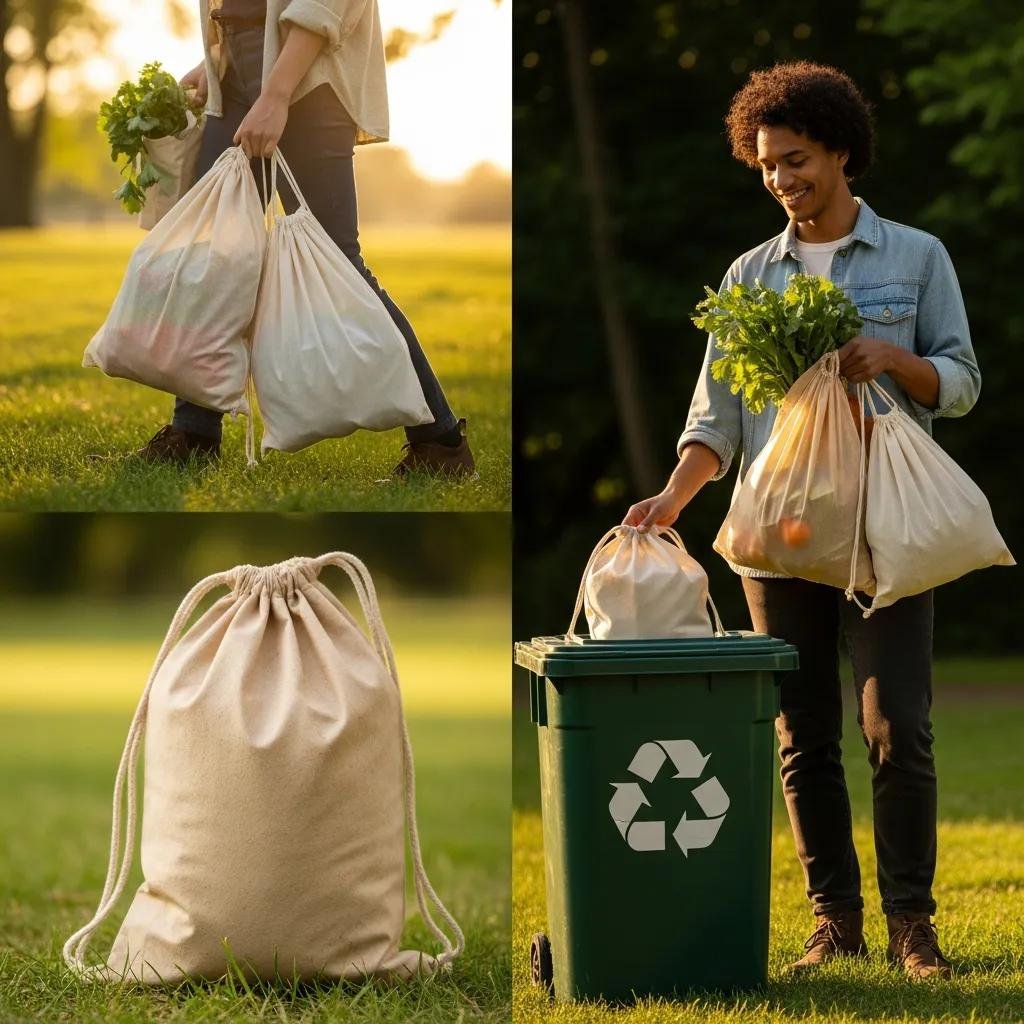
Producing biodegradable drawstring bags provides environmental benefits and market differentiation by using resins such as PBAT/PLA or starch blends that reduce persistence in the environment compared with conventional polyethylene. Biodegradable bag production requires specific machine and process adjustments—temperature control, modified screw profiles on extruders, and careful handling to prevent shear-related degradation—but it enables brands to meet evolving regulatory and consumer expectations. Operationally, companies can position biodegradable bags as a compliance and marketing advantage while pairing production with recycling or composting streams where local infrastructure exists. The table below explains material compatibility and processing notes for common biodegradable resin families to guide equipment configuration decisions.
Intro to material compatibility table: this table maps common biodegradable resins to machine compatibility and processing notes to aid production planning.
Biodegradable bag making machines support sustainable packaging by incorporating temperature-stable feed systems, controlled extrusion and cooling profiles, and gentle web handling to preserve the molecular integrity of PBAT/PLA blends and starch-based formulations. Equipment adaptations can include slower line speeds to manage film drawdown, modified sealing profiles to accommodate different melting points, and dedicated drying and storage for moisture-sensitive resins to prevent hydrolytic degradation. Inline quality checks focused on elongation, tear resistance, and seal strength are essential because biodegradable materials can exhibit different failure modes than conventional PE films. When paired with appropriate end-of-life strategies—composting where applicable or chemical/thermal recycling—these production capabilities enable manufacturers to offer credible eco-friendly products that meet market and regulatory expectations.
Eco-friendly drawstring bags reduce environmental persistence compared with conventional polyethylene by offering compostability or enhanced biodegradability under specific conditions, which decreases long-term litter and microplastic concerns where infrastructure allows proper disposal. Market advantages include stronger sustainability claims for brands, potential regulatory compliance benefits in jurisdictions limiting single-use plastics, and improved consumer perception that can justify premium pricing or differentiated placement. Operationally, manufacturers producing biodegradable bags may realize lifecycle benefits when combined with recycling or composting equipment, closing material loops and reducing raw material demand. These environmental and commercial benefits create incentives for companies to adapt production lines and communicate verifiable end-of-life pathways to customers.
Kingdom Machine Co., Ltd. (also known as China Evergreen Machinery Co., Ltd.) is a manufacturer and supplier specializing in plastic film and plastic bag production equipment, including blown film machines, plastic bag manufacturing machines, flexible printing machines, and recycling machines. The company positions itself around several value propositions—simple operation, perfect performance, easy maintenance, timely after-sales service, strong R&D, one-stop service from innovation to mass production, customization options, strong production capacity, competitive pricing, fast delivery, energy efficiency, and environmental responsibility. Prospective buyers evaluating suppliers should consider these vendor strengths alongside technical specifications and integration support when requesting proposals or custom quotes. The following bullets summarize the key UVPs buyers commonly weigh during vendor selection.
These factual claims reflect the company’s stated strengths and lead into how specific differentiators manifest in equipment design and support.
Kingdom Machine emphasizes R&D-driven customization, quality components that enhance energy efficiency, and production capacity that supports competitive pricing and fast delivery—all of which collectively support customers moving from prototype to mass production. R&D capabilities enable tailored tooling and control software for special bag formats or biodegradable material handling, while component selection (e.g., reliable servo drives and PLC systems) improves uptime and reduces energy consumption per bag. A coordinated product line that includes blown film extrusion and bagging equipment supports synchronized specifications that reduce integration complexity. These differentiators help buyers who require not just a machine but a predictable path to scale production and meet evolving packaging requirements.
Timely after-sales service, access to spare parts, and installation and commissioning assistance are critical to maximizing equipment uptime and ensuring consistent production quality; Kingdom Machine states timely service and spare parts support as part of its offering. Effective after-sales programs typically include remote troubleshooting support via control-system diagnostics, structured spare-parts kits for common wear items, and operator training to shorten the learning curve. Installation and commissioning assistance ensure that extrusion and bagging settings are dialed in for the target material, which reduces initial scrap rates and accelerates ramp-up to full production. For customers looking to minimize downtime and maintain consistent output, evaluating a supplier’s documented after-sales processes and parts availability is an essential procurement step.
For inquiries about tailored configurations or to request a custom quote, contact Kingdom Machine Co., Ltd.’s sales team to discuss specific production requirements and available options.
Elevate your machinery performance with our premium spare parts and components. Trust in our quality and reliability for optimal operation and longevity.
Maximize efficiency with expert installation for your plastic production machines. Our professional team ensures optimal performance tailored to your needs.

Transform your concepts into reality with our tailored installation solutions. Experience professional guidance and exceptional results designed just for you.

Elevate your production with essential tips for selecting the right plastic bag making equipment. Make informed choices for efficiency and quality today.
