

Reliable Spare Parts and Components for Your Machines
Elevate your machinery performance with our premium spare parts and components. Trust in our quality and reliability for optimal operation and longevity.
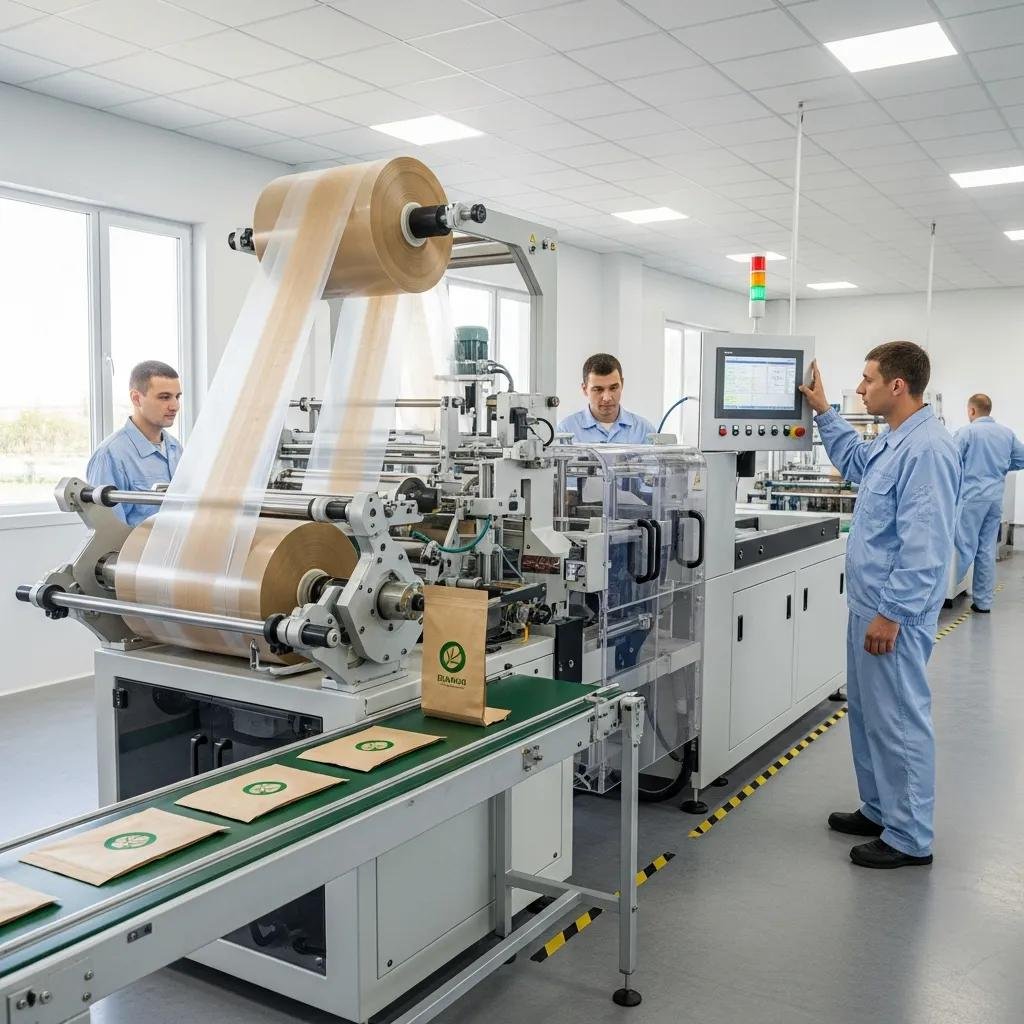
Sustainable bio bag making machines produce plastic film and finished bags from biodegradable and compostable resins, enabling manufacturers to replace conventional polyethylene formats with compostable PBAT, PLA and starch-based alternatives. This guide explains how these machines work, which bag formats they can produce, and the processing and certification considerations that determine real-world performance and market acceptance. Manufacturers and product developers will learn machine categories (film blowing lines, converting and bag-making equipment), key performance features to prioritize, and how material selection impacts extrusion settings and product certification. The article also covers environmental and commercial benefits, practical application areas, and equipment options that support a transition to green packaging solutions. Read on for a detailed technical primer followed by specific machine offerings and inquiry guidance from Kingdom Machine Co., Ltd., framed so you can map processing needs to procurement choices and next steps.
Sustainable bio bag making machines are packaging machinery and film extrusion equipment designed to process biodegradable polymers (such as PBAT, PLA and starch blends) into blown film and converted bag formats, reducing reliance on fossil-fuel-based plastics and enabling compostable end-of-life options. These systems combine modified extruders, die heads, air rings, cooling systems and converting stations to control melt rheology, bubble stability and film properties, producing flexible packaging that meets functional and environmental requirements. By handling materials with specific drying, temperature and shear sensitivities, these machines play a pivotal role in converting renewable or biodegradable resins into retail, waste-management and food-contact products. Understanding how machine categories map to bag types helps manufacturers choose lines that meet throughput, quality and certification targets for green packaging.
Biodegradable and compostable bag machines process PBAT, PLA and corn starch blends through a controlled sequence: feed and drying
extrusion (single or twin-screw)
melt filtration and die shaping
bubble cooling and flattening
winding or converting into bags. Material preparation is critical because PLA and starch-based blends require lower moisture levels and careful thermal profiles to avoid hydrolysis or degradation, and extruder screw design or venting may be adapted to improve melt homogeneity. Machine adaptations commonly include precise temperature zones, vacuum degassing, specialized screw geometries, and enhanced cooling rings to stabilize the film bubble and minimize web variability. Addressing these processing needs early reduces scrap and enables consistent film quality, which then informs downstream converting choices such as gusseting or punch-hole handling for specific bag formats.
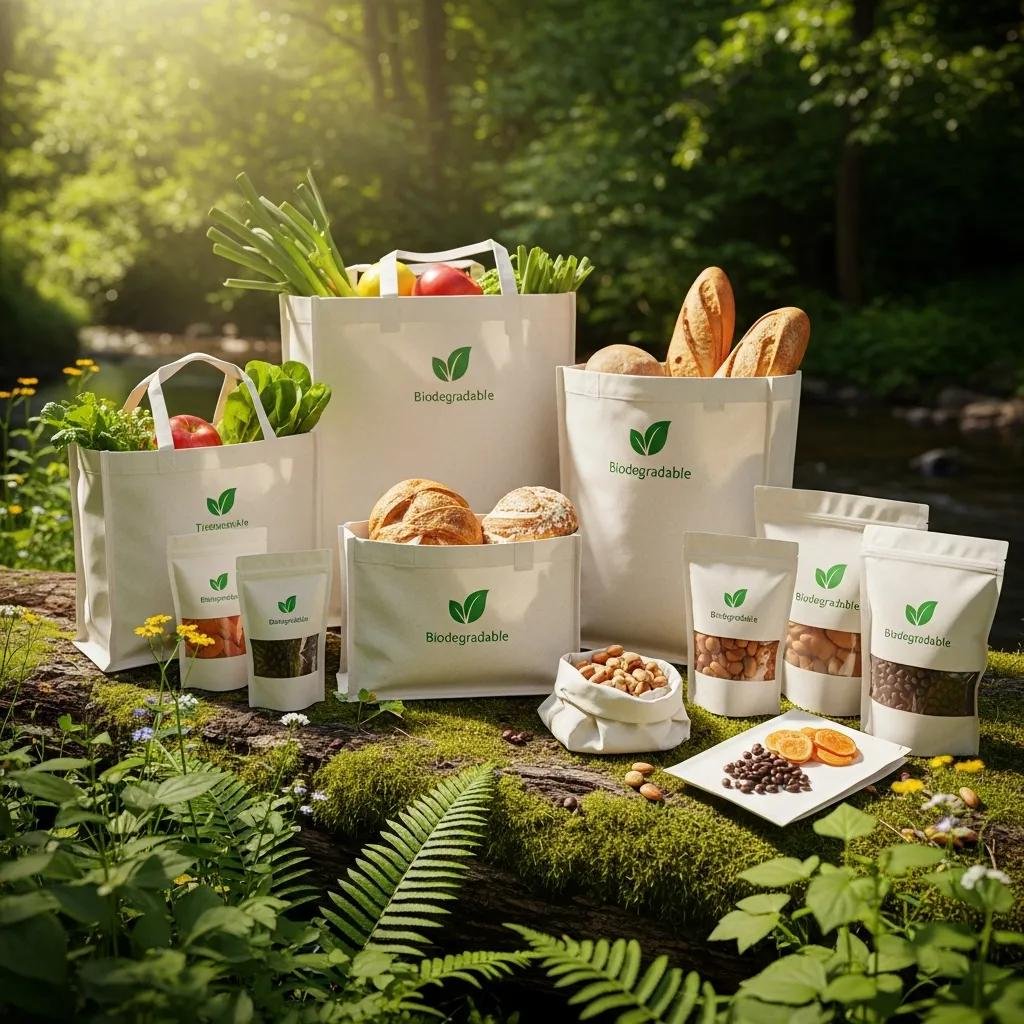
Sustainable packaging machinery can produce a wide range of bag types including T-shirt shopping bags, flat bags, garbage sacks, produce bags and resealable pouch formats, depending on line configuration and converting modules. T-shirt and retail shopping bags typically use a blown film extrusion line followed by cutting, sealing and punching stations, while garbage bags require thicker gauge capability and high-throughput winding; ziplock and resealable formats need dedicated converting modules for zipper insertion and precision sealing. Typical production-rate ranges vary by machine and bag size but manufacturers can expect scalable outputs by selecting appropriate extruder diameters, die sizes and high-speed converting heads. Choosing the right machine lineup ensures the target bag format meets tensile, barrier and compostability requirements for its intended application.
Different sustainable bag formats map to specific machine families and line modules.
High-performance biodegradable bag making machines are defined by automation level, precise control systems (servo motors and PLC/HMI), robust extruder and die designs, and energy-efficient components that reduce scrap and operating cost. These features collectively enable consistent film thickness, stable bubble control, and rapid changeovers between materials and bag formats. In practical terms, look for machines that incorporate real-time monitoring, computer-controlled tension systems, and modular converting stations to adapt quickly to different compostable resin behaviors.
The following comparison table highlights key components, their performance attributes and measurable benefits to help procurement teams quantify trade-offs and expected returns.
Automatic operation and high-speed production reduce labor intensity, improve unit cost and increase throughput, directly impacting return on investment for biodegradable plastic bag making lines. Automated feeding, cutting, stacking and roll handling minimize human variability and allow consistent cycles per minute, while high-speed film blowing paired with precision winding reduces downtime from roll changes. Typical automation benefits include lower scrap rates, tighter dimensional tolerances and predictable outputs that simplify downstream logistics and packaging. These efficiency gains support scaling sustainable product lines and make it easier for manufacturers to meet growing market demand for green packaging while controlling unit economics.
Servo motors and PLC control systems improve process stability, energy efficiency and repeatability in eco-friendly film blowing machines by enabling precise control over film speed, tension and cutter timing. These systems allow recipe-based setups for different materials — for example, a saved profile for PLA blends versus PBAT-rich formulations — which reduces setup time and scrap during material switches. Diagnostics and fault logging in PLC/HMI environments simplify maintenance and minimize unscheduled downtime, and servo drives often deliver energy savings compared with legacy motor systems due to better torque and speed management. The net result is higher yield on expensive biodegradable resins and more reliable production of certified compostable bags.
These performance attributes underline why advanced control systems are central to productive and sustainable bag making operations, and they lead into the environmental and business benefits operators can expect.
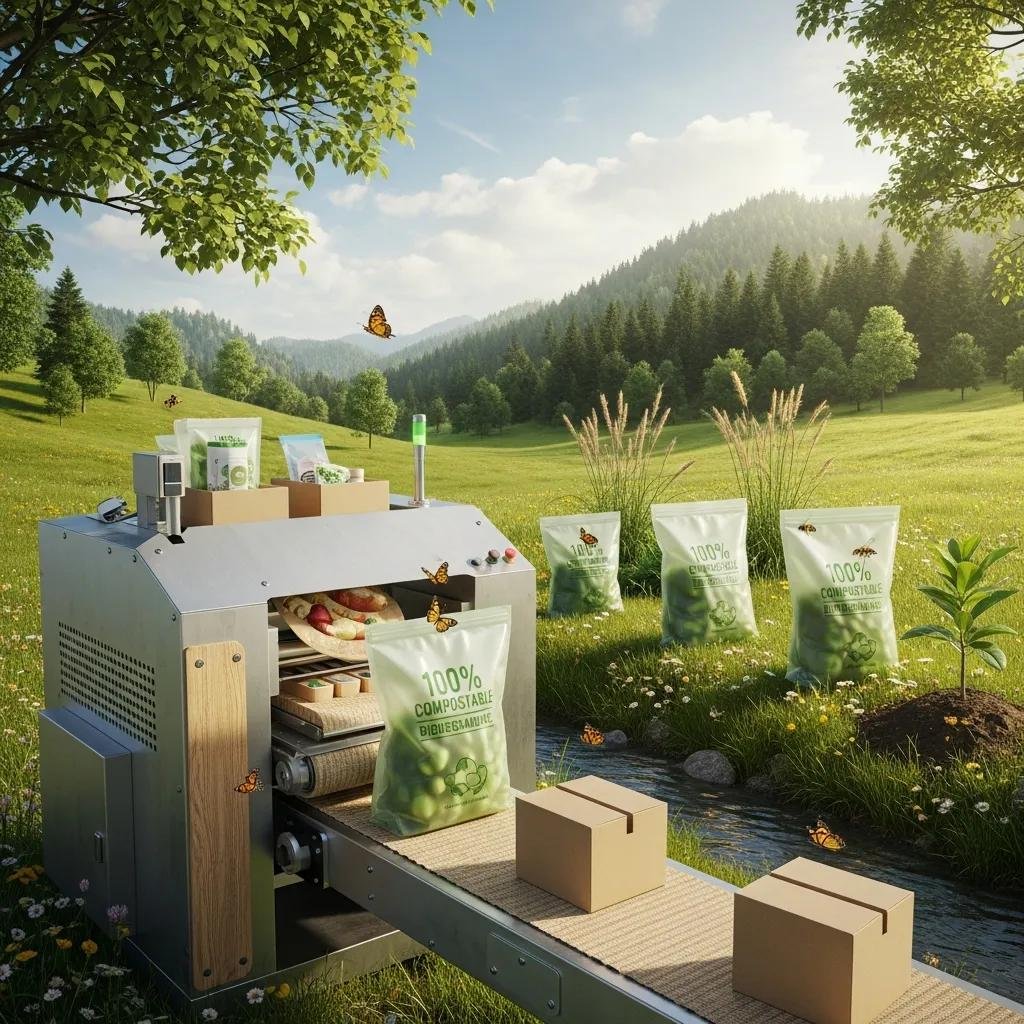
Sustainable packaging machinery reduces lifecycle environmental impact by enabling compostable or biodegradable end-of-life paths, lowering reliance on virgin fossil polymers, and cutting material waste through precise control and lower scrap rates. From a business perspective, adopting these machines positions manufacturers to comply with tightening regulations, meet retailer and consumer sustainability demands, and access premium market segments that value certified compostable packaging. Operational cost advantages include improved material yield, potential energy savings with efficient drives and lower logistics costs if lightweighting or local production replace imported films. Understanding both environmental and commercial returns helps companies justify investments in specialized biodegradable film extrusion and bag-making equipment.
Sustainable machinery delivers measurable environmental and commercial benefits:
These benefits provide the rationale to evaluate specific machine models and services, which is the natural next step when mapping production needs to supplier capabilities.
Kingdom Machine Co., Ltd. can support companies transitioning to sustainable bag production by offering a range of biodegradable and compostable equipment and one-stop service options that align with the benefits above. The company provides film blowing and bag-making lines compatible with PBAT, PLA and starch blends, emphasizing customization, servo and PLC control integration, and global after-sales support. For manufacturers ready to evaluate equipment, requesting technical consultations and capacity-matching advice will help translate environmental and market goals into machine specifications and production plans.
Kingdom Machine Co., Ltd. supplies a selection of biodegradable bag making and film extrusion solutions suited for PBAT, PLA and corn-starch-based materials, marketed toward manufacturers seeking eco-friendly production lines and customizable configurations. Typical offerings include biodegradable T-shirt bag making lines and dedicated PBAT/PLA film extrusion lines with modified extruders, co-extrusion options and tailored converting modules to produce retail, garbage and specialty bags. The supplier emphasizes high efficiency through servo and PLC controls, customization and a one-stop service approach that supports installation and commissioning. Below is a product-spec EAV table to compare representative machine model types and their typical applications to help procurement teams shortlist options.
Kingdom Machine’s biodegradable T-shirt bag making machines are configured to handle common compostable film gauges and include automatic cutting, handle punching and stacking systems designed for continuous high-speed production. These machines are typically paired with extruders capable of stable outputs when processing PBAT/PLA/starch blends, and converters are adjusted for tensile and elongation properties to prevent film tearing during punching or bag stacking. Customization options often include reinforced sealing, adjustable cutter timing and upgraded winding systems to match downstream packaging and shipping workflows. Selecting a complete line that pairs an extrusion unit sized for target throughput with the appropriate converting head is crucial to achieve consistent bag dimensions and material yields.
PBAT/PLA film extrusion lines and corn starch film blowing technologies enable eco-friendly production by offering configurations that stabilize sensitive resins, incorporate co-extrusion to balance performance and compostability, and allow precise control over thermal and shear history. Multi-layer strategies can combine a compostable core with thin functional layers to improve strength or barrier properties while maintaining overall compostability when compatible materials are used. Additives and processing aids — for instance, plasticizers or compatibilizers compatible with compostable standards — are integrated carefully to avoid compromising certification. Matching line configuration and material formulation is essential to delivering films that meet application requirements without sacrificing end-of-life biodegradation.
An overview of line configurations and their role in balancing performance and compostability leads naturally into the material-specific processing considerations that follow.
PBAT, PLA and corn starch-based materials each bring distinct mechanical, thermal and biodegradation behaviors that influence film blowing and bag-making parameters, and these differences dictate machine settings, pre-processing requirements and certification pathways. PBAT typically offers higher flexibility and elongation, PLA provides stiffness and clarity but requires careful thermal control, and starch blends can reduce cost and increase biodegradability but need compatibilizers for strength. Material-specific considerations — such as drying protocols for PLA, screw profile adjustments for PBAT, and compounding requirements for starch blends — drive decisions about extruder configuration, temperature profiling and cooling strategies. Understanding these material properties enables manufacturers to choose appropriate extrusion and converting systems to achieve target performance while preserving compostability.
PBAT and PLA differ in melting behavior, rheology and thermal sensitivity, requiring distinct extrusion strategies: PBAT tolerates higher shear and provides flexibility, while PLA demands low-moisture feedstock and controlled barrel temperatures to prevent degradation. Practical processing adjustments include using vented or twin-screw extruders for improved homogenization, lowering residence times for PLA, and optimizing cooling rates to control crystallinity and film stiffness. Additives such as plasticizers or impact modifiers can improve toughness for PLA films, while PBAT blends may be tuned for elongation and puncture resistance. These processing insights inform machine selection and underscore the need for adaptable control systems and precise temperature management.
Certifications such as EN 13432 and ASTM D6400 define test protocols for industrial compostability and biodegradability; these standards evaluate disintegration, biodegradation percentage under controlled composting conditions, and ecotoxicity of residues. Manufacturers must select raw materials and formulate films that can pass the relevant tests for their target markets, and processing must avoid additives that impair compostability. Achieving certification depends on both material choice and consistent production quality, which in turn relies on machine capability to produce homogeneous, uncontaminated film batches. Understanding certification criteria helps align material sourcing, formulation and production control to ensure compliant, market-ready compostable bags.
Sustainable bio bags are used across retail, food packaging, produce handling and municipal waste management applications where compostability, consumer perception and regulatory drivers create demand for non-fossil alternatives. In retail, T-shirt and shopping bags offer visible consumer-facing sustainability benefits; in food retail and produce, certified compostable bags must meet food-contact and shelf-life needs; for waste management, biodegradable liners support organic-waste collection programs. Market trends accelerating adoption include regulatory restrictions on single-use conventional plastics, procurement policies favoring certified compostable options, and consumer preference shifts toward green packaging. These application-specific requirements influence material selection, film performance targets and machine line choices.
Common application areas and their functional requirements:
Choosing the correct bag format and verifying machine capability for those requirements prepare manufacturers to meet sector expectations and regulatory timelines.
In retail, biodegradable T-shirt and carry bags are a high-visibility sustainability statement that requires consistent printing and handle quality; film properties such as clarity and tensile performance affect brand presentation and usability. Food packaging applications demand films that maintain barrier properties enough for the intended shelf life while remaining compatible with food-contact regulations and compostability testing. In municipal or commercial organic-waste programs, compostable liners must survive use and collection handling yet biodegrade effectively in industrial composting systems. Aligning material formulation, certification and machine performance ensures that each application’s specific functional needs are met.
Market growth for biodegradable and compostable flexible packaging is driven by policy changes restricting certain single-use plastics, corporate sustainability commitments, and rising consumer demand for recyclable or compostable options, creating a favorable investment case for specialized machinery. Recent studies and market projections indicate increasing adoption rates in regions enforcing stricter packaging regulations and among companies pursuing circular-economy strategies. These trends encourage manufacturers to invest in flexible packaging machinery capable of processing PBAT, PLA and starch blends to capture growing market segments. Understanding regulatory direction and market momentum helps prioritize machine features and scale when planning new equipment purchases.
For manufacturers ready to explore procurement options and align machine capabilities with material and market targets, Kingdom Machine Co., Ltd. offers consultation and equipment configurations to match production capacity and application focus. To request a technical consultation, capacity assessment or quotation, interested teams should contact Kingdom Machine Co., Ltd. directly to discuss line options, customization and after-sales support; this direct engagement helps translate application needs into an optimized equipment roadmap.
Elevate your machinery performance with our premium spare parts and components. Trust in our quality and reliability for optimal operation and longevity.
Maximize efficiency with expert installation for your plastic production machines. Our professional team ensures optimal performance tailored to your needs.

Transform your concepts into reality with our tailored installation solutions. Experience professional guidance and exceptional results designed just for you.

Elevate your production with essential tips for selecting the right plastic bag making equipment. Make informed choices for efficiency and quality today.
