

Reliable Spare Parts and Components for Your Machines
Elevate your machinery performance with our premium spare parts and components. Trust in our quality and reliability for optimal operation and longevity.
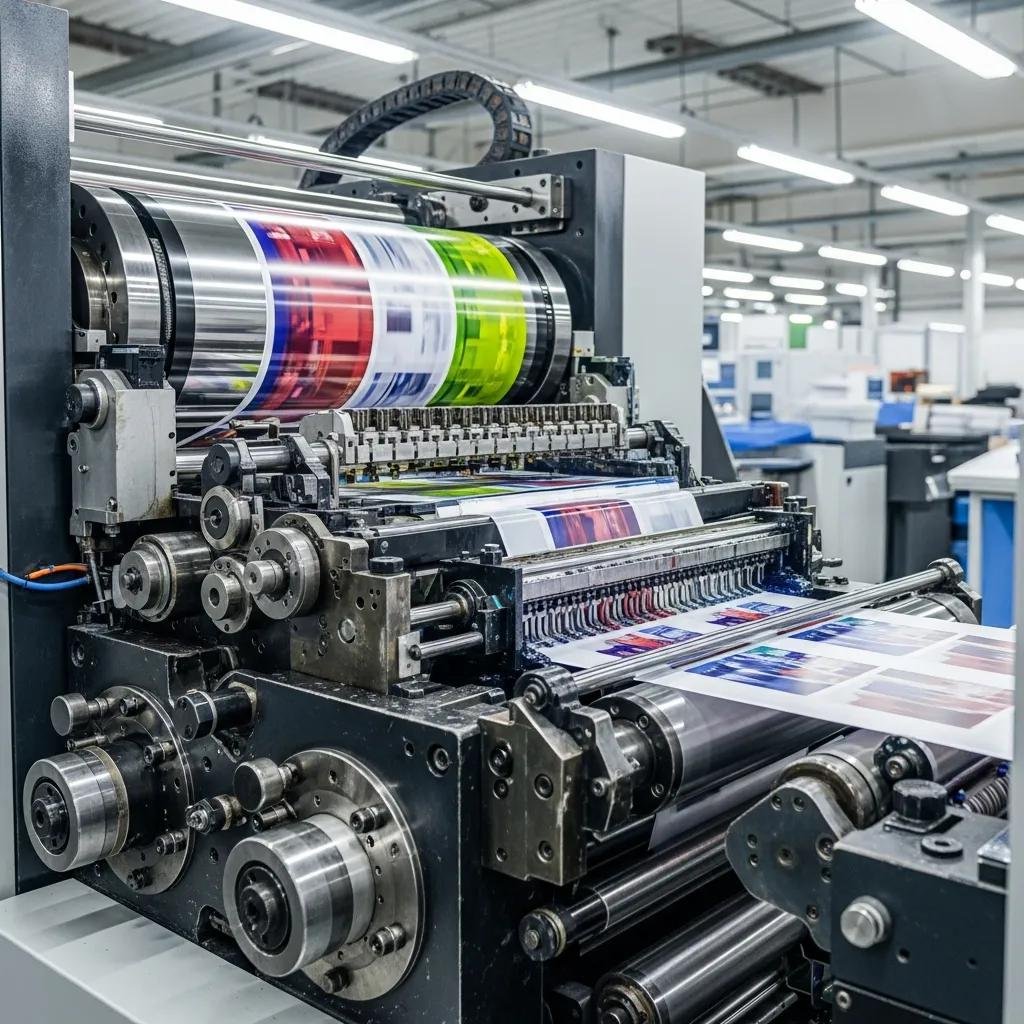
Gravure printing machines, also called rotogravure presses, are industrial printing presses that reproduce continuous-tone, high-fidelity graphics by transferring ink from finely engraved cylinders to flexible substrates. This article explains how the intaglio gravure process achieves exceptional color density and photographic detail, outlines technical benchmarks buyers should compare, and maps practical applications across flexible packaging and plastic film production. Readers will gain actionable insights into machine components, high-speed multi-color press specifications, substrate interactions, cost and ROI considerations, and current trends like automation and eco-inks that shape purchasing decisions. The guide also highlights how supplier capabilities—such as customization, production capacity, quality assurance, and after-sales service—affect long-term performance and total cost of ownership. Below we cover core process mechanics, specifications and EAV tables, applications and substrate recommendations, supplier value propositions, investment and maintenance planning, and sustainability-driven innovations to support informed procurement of gravure equipment.
A gravure printing machine uses engraved cylinders whose intaglio cells hold and meter precise ink volumes, transferring ink to a substrate through controlled contact and drying to produce continuous-tone images with high color density. The mechanism relies on the geometry of engraved cells, a doctor blade system that meters excess ink, an impression roller that brings substrate into contact, and drying units that set ink quickly to preserve registration and clarity. This precision makes gravure ideal for long-run, brand-critical packaging where photographic detail and consistent color are required across millions of meters. Understanding these core components frames decisions about cylinder engraving resolution, ink system selection, and drying capacity for specific production goals.
Gravure presses differ from other industrial printing machinery primarily in the way they reproduce tonal gradients and in their suitability for very high-volume production, which leads naturally into a closer look at the intaglio cell mechanics that enable gravure’s continuous-tone reproduction.
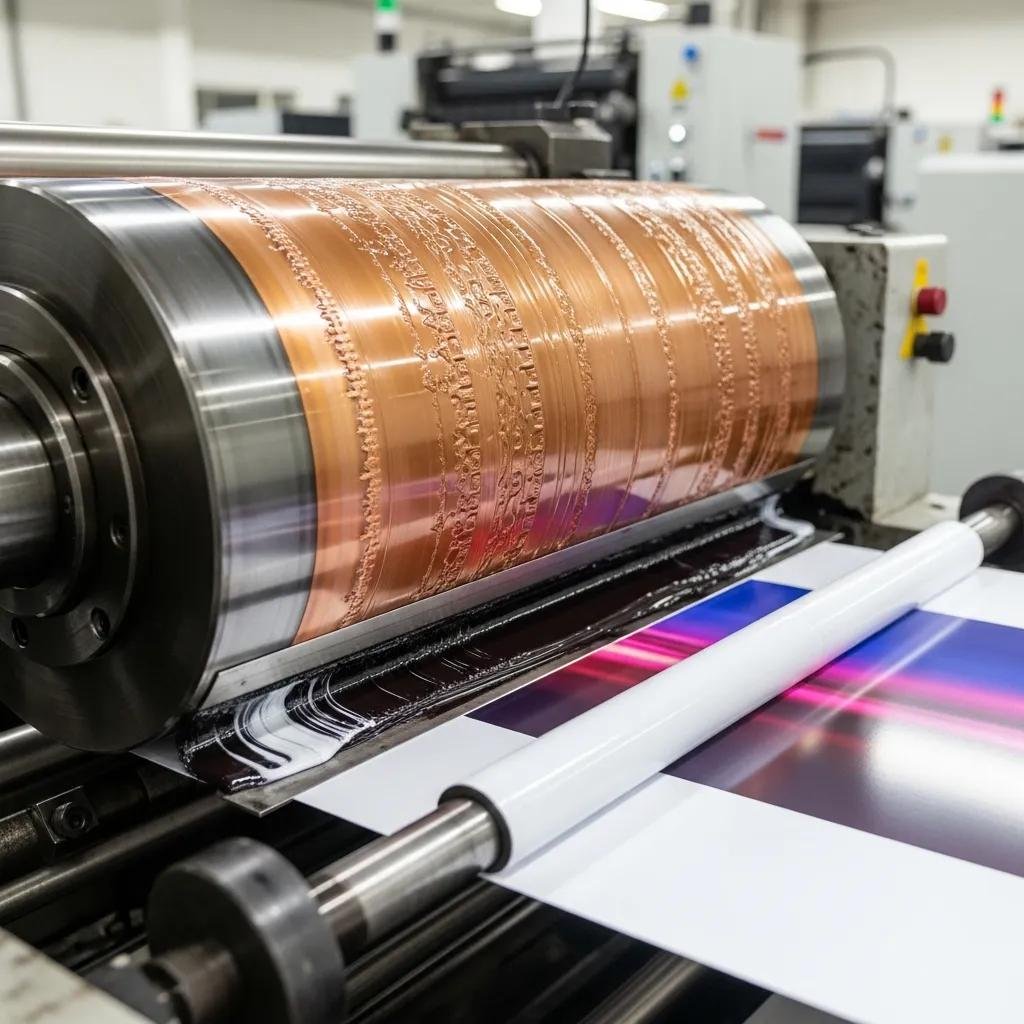
Intaglio gravure achieves high-quality graphics by engraving microscopic cells into a cylinder surface; the cell depth and volume control ink transfer for each tonal area, enabling smooth gradients and photographic reproduction. During printing, the engraved cylinder rotates through an ink fountain where cells fill, then a doctor blade removes excess ink leaving ink only in the cells, and the substrate contacts the cylinder under pressure to pick up the metered ink. Engraving resolution is measured in LPI (lines per inch) or cells-per-centimeter, and higher resolutions with controlled cell geometry yield finer detail and more consistent halftones. Precise control of ink viscosity, substrate surface energy, and drying parameters completes the reproduction chain and determines final print sharpness and gloss.
This cell-level precision underscores why buyers must evaluate engraving capabilities and registration systems when comparing rotogravure machines, which leads to the next section contrasting gravure with other printing technologies.
Gravure, flexo, and digital printing each serve distinct production profiles: gravure excels in very long runs and photographic quality, flexo offers versatility for moderate runs with faster setup, and digital provides short runs and variable data without cylinders. Gravure produces continuous-tone images with deep color saturation due to engraved cells and substantial ink laydown, whereas flexo relies on relief plates and is better for simpler graphics on a wider range of substrates with lower cylinder costs. Digital printing removes cylinder costs and supports personalization but generally lags in color density and speed for large-volume film printing. Choose gravure when run lengths are long and image fidelity is paramount; choose flexo when faster changeovers and lower cylinder costs are needed; and choose digital for short, variable or highly customized jobs.
To illustrate relative strengths, consider this quick comparison list of use-case guidance.
These technology choices affect procurement strategy, so understanding specification benchmarks for gravure presses helps buyers evaluate whether a rotogravure press matches production needs.
A modern high-quality gravure printing press is defined by web width, maximum line speed, number of printing units, registration accuracy, drying capacity, and automation features such as PLC controls and shaftless drives. Buyers should compare web widths in relation to intended film formats, maximum speeds (m/min) for throughput targets, the number of color units for artwork complexity, and drying/recovery systems that match ink chemistry. Robust registration tolerance, automatic web handling, and integration-friendly controls determine how reliably a press produces consistent graphics at high speed and low waste. Assessing these technical attributes helps match a rotogravure machine to product mix, substrate type, and required uptime.
Below is a machine-readable EAV table that highlights typical specifications buyers evaluate when sourcing gravure presses.
After assessing pure technical attributes, many purchasers also weigh supplier capabilities; the next paragraph briefly connects technical needs to practical procurement options from manufacturers that offer customization and proven production capacity.
Kingdom Machine Co., Ltd. offers gravure printing machines alongside related equipment such as blown film extrusion machines and flexo printing machines, emphasizing simple operation, easy maintenance, timely after-sales service, and 100% final inspection quality assurance. Their product approach includes one-stop customization, a two-year warranty on timer switches, strong R&D, competitive pricing, and fast delivery—attributes that matter when a buyer seeks a turnkey solution and reliable support. For procurement, request detailed datasheets and factory capability information to align press specifications with expected throughput and substrate mix.
High-speed multi-color gravure presses are characterized by wide web capacity, high line speeds, modular color towers, strong drying and solvent recovery (if solvent inks are used), and precise registration systems to maintain tight tolerances at speed. Web width should match finished film dimensions to avoid unnecessary trimming, while line speed determines throughput and must be supported by sufficient drying capacity to avoid set-off or smearing. Automatic registration reduces waste and increases first-pass yield, and shaftless drive designs improve modularity and reduce mechanical backlash. Evaluating these specs together allows procurement teams to balance throughput goals against image quality requirements.
Buyers should request specifications that list peak speeds, typical production speeds for specific substrates, and registration tolerances so they can model expected outputs and ROI.
Customization in gravure presses—such as tailored cylinder engraving parameters, dedicated drying modules, automated registration upgrades, and in-line inspection—transforms general-purpose machinery into purpose-built production systems that reduce downtime and improve yield. Matching engraving resolution to artwork needs prevents over-specification and lowers cylinder costs, while modular dryer and solvent-recovery options align with ink chemistry to optimize curing and reduce VOC emissions. Automation modules including automatic turret rewind, in-line slitting, and remote diagnostics shorten changeover times and allow predictive maintenance. These custom options deliver measurable efficiency gains in uptime and scrap reduction, improving total cost of ownership across long production runs.
Selecting appropriate modular upgrades should follow pilot trials and substrate tests to ensure the customization produces the intended quality and throughput improvements.
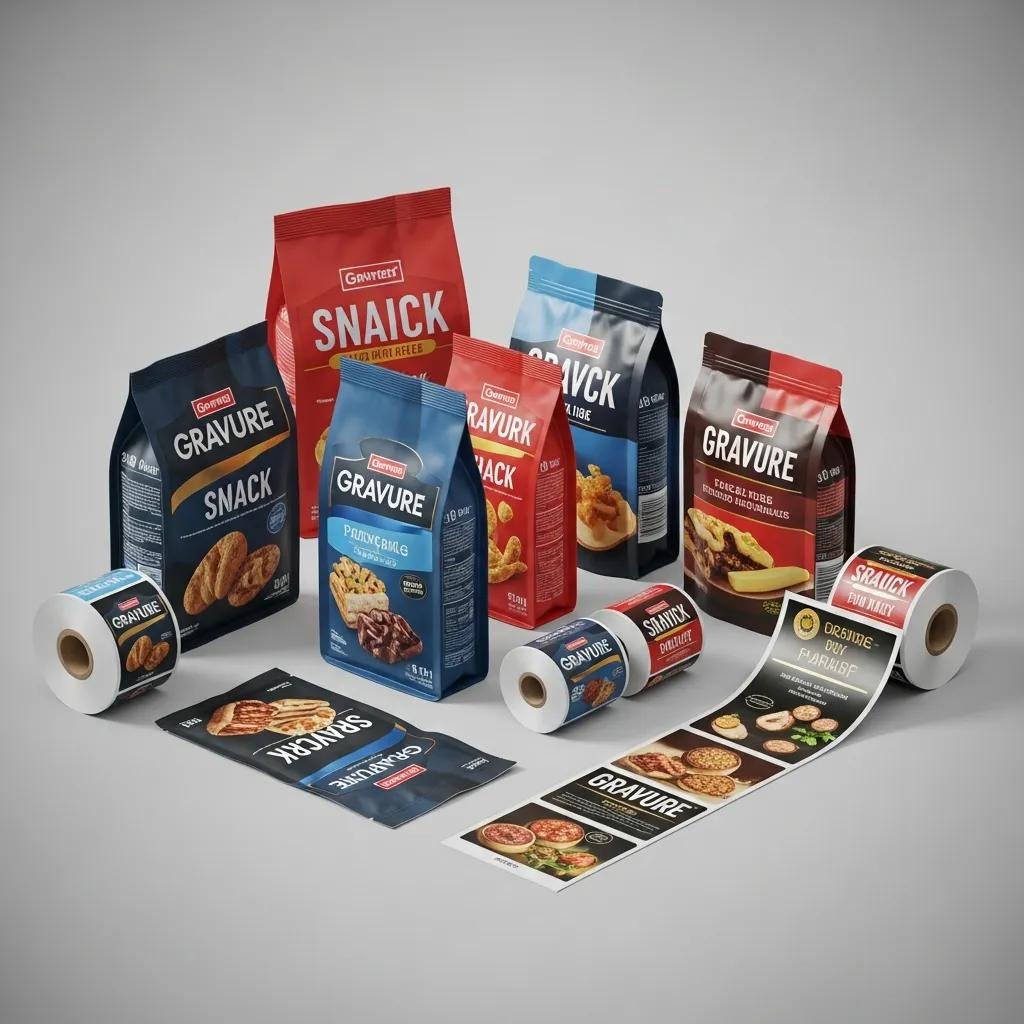
Gravure printing is widely used across flexible packaging segments where image fidelity, consistent color, and durability are critical—examples include snack packaging, laminated pouches, shrink sleeves, and high-end labels. The process integrates well with film production lines both in-line and off-line, enabling direct printing on BOPP, PET, PE, and other polymer films that later undergo lamination or metallization. Gravure’s strength lies in delivering photographic imagery and solid color blocks with minimal banding, which supports premium branding on consumer goods. Understanding how gravure integrates into film extrusion, coating, and lamination workflows is essential for designing efficient production lines.
Next, we map specific packaging types to gravure strengths to help procurement teams prioritize press features and substrate prep.
Gravure presses require attention to film surface energy and possible pre-treatment for optimal adhesion; the next subsection explains which packaging formats benefit most from gravure’s capabilities.
Flexible packaging formats that demand premium graphics and consistent brand appearance—such as snack packs, retortable pouches, pharmaceutical blister backers, and premium laminated pouches—benefit most from gravure printing’s continuous-tone reproduction and stable ink laydown. These packages often require strict color matching across batches and high abrasion or barrier performance, which gravure can achieve when paired with appropriate inks and conversion steps. For regulatory-sensitive segments like food and pharma, gravure ink systems and drying must meet migration and safety standards, which is why coordination between press setup and downstream lamination is essential. Brands that depend on photographic imagery or metallic effects will find gravure particularly effective for maintaining visual integrity across long runs.
Choosing gravure for these formats should follow substrate compatibility tests and alignment with lamination or sealing requirements.
Plastic film substrates influence gravure print quality through surface energy, orientation (biaxial properties), thickness, and barrier layer composition, all of which affect ink wetting, adhesion, and drying rate. Films with low surface energy like PE may need corona treatment to improve ink anchorage, while biaxially oriented films such as BOPP or PET provide stable dimensional behavior that supports tight registration at speed. Barrier layers and metallization can alter ink appearance and may require specialized inks or primers to prevent blocking or adhesion issues. A substrate testing checklist—covering surface energy, dimensional stability, and lamination compatibility—ensures press settings and ink selection are optimized before scale production.
Proper substrate preparation and testing reduce waste and establish reproducible print quality across extended production runs.
Selecting a supplier involves assessing equipment capabilities as well as service, warranty, and production capacity; Kingdom Machine Co., Ltd. emphasizes simple operation, perfect performance, easy maintenance, and timely after-sales service which collectively support long-term uptime. The company highlights 100% final inspection for quality assurance and offers a two-year warranty on timer switches, while promoting strong R&D, one-stop customization, competitive prices, and fast delivery—factors that reduce implementation risk and support tailored production needs. Their installed base includes over 1,700 machines worldwide with feedback from 102 countries, signaling broad deployment experience across different production environments. These supplier attributes matter when buyers plan installation, operator training, and spare-parts strategies for gravure lines.
For teams evaluating vendors, the next subsection breaks down the explicit UVPs and what they mean for operations and procurement.
Kingdom Machine’s key value propositions—simple operation, easy maintenance, timely after-sales service, and 100% final inspection quality assurance—translate into lower operator training demands, faster troubleshooting, reduced downtime, and predictable final quality. The stated two-year warranty on timer switches gives buyers a specific assurance for critical control elements, while one-stop customization and strong production capacity mean presses can be tailored and delivered to match production ramps. Competitive pricing and fast delivery reduce procurement lead times and capital allocation uncertainty. Together, these attributes address buyer pain points around installation risk, operator competency, and maintaining consistent throughput.
Understanding these vendor strengths helps procurement craft relevant RFP criteria and service-level expectations.
Kingdom Machine also positions its product range alongside related machinery such as blown film extrusion and flexo printing machines, providing integrated line options for converters aiming to source multiple production units from a single supplier.
Ideal customer success narratives for gravure presses emphasize measurable outcomes—such as throughput increases, waste reduction percentages, first-pass yield improvements, and reductions in cylinder turnaround time—to demonstrate real-world performance and reliability. Case studies should present before/after metrics, describe implemented customizations (e.g., added drying modules or automatic registration), and include operational KPIs like running speed, uptime, and maintenance intervals. Presenting these metrics allows new buyers to estimate likely ROI and production gains. While specific testimonials are not reproduced here, structuring vendor-supplied case studies around quantitative outcomes creates persuasive evidence for procurement teams.
Documented metrics in case studies support benchmarking during vendor selection and justify investment decisions based on expected performance improvements.
Purchasing a gravure press requires analyzing CAPEX, OPEX, cylinder engraving costs, consumables (inks and solvents), energy for drying, and expected throughput to calculate payback and lifecycle costs. Major cost drivers include initial machine price, engraving and replacement cylinder costs, solvent recovery or VOC control systems if applicable, and the labor/skill level required for operation and maintenance. Operational planning should include spare-parts inventory, preventative maintenance schedules, operator certification, and potential downtime scenarios to estimate realistic OEE (overall equipment effectiveness). This total cost-of-ownership approach helps compare gravure against flexo or digital alternatives based on expected production volume and quality requirements.
Below is a decision-oriented table that maps cost elements to their impact and offers practical advice for budgeting.
Gravure typically offers superior unit economics for very high-volume, long-run production because engraving costs are amortized across large output, yielding lower cost per meter than flexo or digital at scale. ROI favors gravure when run lengths and repeat orders are predictable and when high image fidelity commands premium pricing or brand differentiation. Short runs or frequently changing SKUs shift the economics toward flexo or digital due to lower setup and cylinder costs. Buyers should perform run-length break-even calculations that include cylinder cost, expected scrap rates, and throughput to determine whether gravure presents the best financial case.
A practical rule of thumb is to compare unit costs across expected annual volumes and include cylinder amortization to identify the production threshold where gravure becomes the most economical option.
Best practices for gravure press onboarding begin with site readiness assessments that validate power, ventilation, floor loading, and material handling paths; these steps prevent commissioning delays. Structured operator training covering cylinder handling, doctor blade maintenance, ink system tuning, and registration adjustment reduces early scrap and improves first-pass yield. Preventative maintenance schedules should include routine inspection of engraving cylinders, doctor blades, rollers, and drying systems, coupled with a spare-parts strategy for high-wear items. Establishing a phased ramp-up timeline—from factory acceptance testing to supervised initial runs—ensures production targets are met while minimizing unplanned downtime.
Adopting these practices reduces lifecycle costs and preserves print quality as production scales.
Current trends shaping gravure technology include automation and Industry 4.0 integration, demand for sustainable inks and substrates, and tighter regulatory requirements for VOC emissions and recyclability. Automation features such as automatic registration, remote diagnostics, and predictive maintenance improve uptime and reduce labor dependencies, while data capture enables ongoing process optimization. Sustainability drivers push adoption of water-based, low-VOC, or UV-curable inks and encourage substrate selection compatible with recycling or composting targets. These market forces influence machine design choices—such as solvent recovery units and energy-efficient dryers—that buyers should evaluate when planning future-proof investments.
The following list summarizes key technology and sustainability trends affecting gravure procurement and operations.
Automation and digitalization are transforming gravure by embedding PLC controls, real-time data capture, and remote diagnostics that enable condition-based maintenance, automatic registration correction, and faster changeovers. These systems reduce human error, shorten setup times, and provide analytics to optimize ink consumption and reduce scrap. Remote support capabilities can accelerate troubleshooting, limiting costly downtime and improving overall equipment effectiveness. Integrating these features during procurement ensures the press remains adaptable to evolving production demands and supports scalable process improvements.
Investing in automation pays off in higher availability and improved first-pass yield, particularly on high-speed multi-color presses where tight registration is critical.
Sustainable gravure ink options include water-based formulations, low-VOC solvent systems with efficient recovery, and UV-curable chemistries that reduce volatile emissions and speed curing. Each ink type has trade-offs: water-based inks lower VOCs but may require different drying profiles and pretreatment; low-VOC solvent systems need recovery units to meet environmental rules; UV-curable inks deliver instant cure but require compatible substrates and safety controls. Compatibility with barrier films and lamination processes must be validated through testing to ensure food-safety and recyclability requirements are met. Adopting these eco-friendly options often involves re-specifying dryers, ventilation, and material handling to realize sustainability goals.
Careful ink and substrate testing combined with appropriate drying and recovery equipment enables sustainable high-quality gravure production that aligns with current regulatory and market pressures.
Elevate your machinery performance with our premium spare parts and components. Trust in our quality and reliability for optimal operation and longevity.
Maximize efficiency with expert installation for your plastic production machines. Our professional team ensures optimal performance tailored to your needs.

Transform your concepts into reality with our tailored installation solutions. Experience professional guidance and exceptional results designed just for you.

Elevate your production with essential tips for selecting the right plastic bag making equipment. Make informed choices for efficiency and quality today.
