

Reliable Spare Parts and Components for Your Machines
Elevate your machinery performance with our premium spare parts and components. Trust in our quality and reliability for optimal operation and longevity.
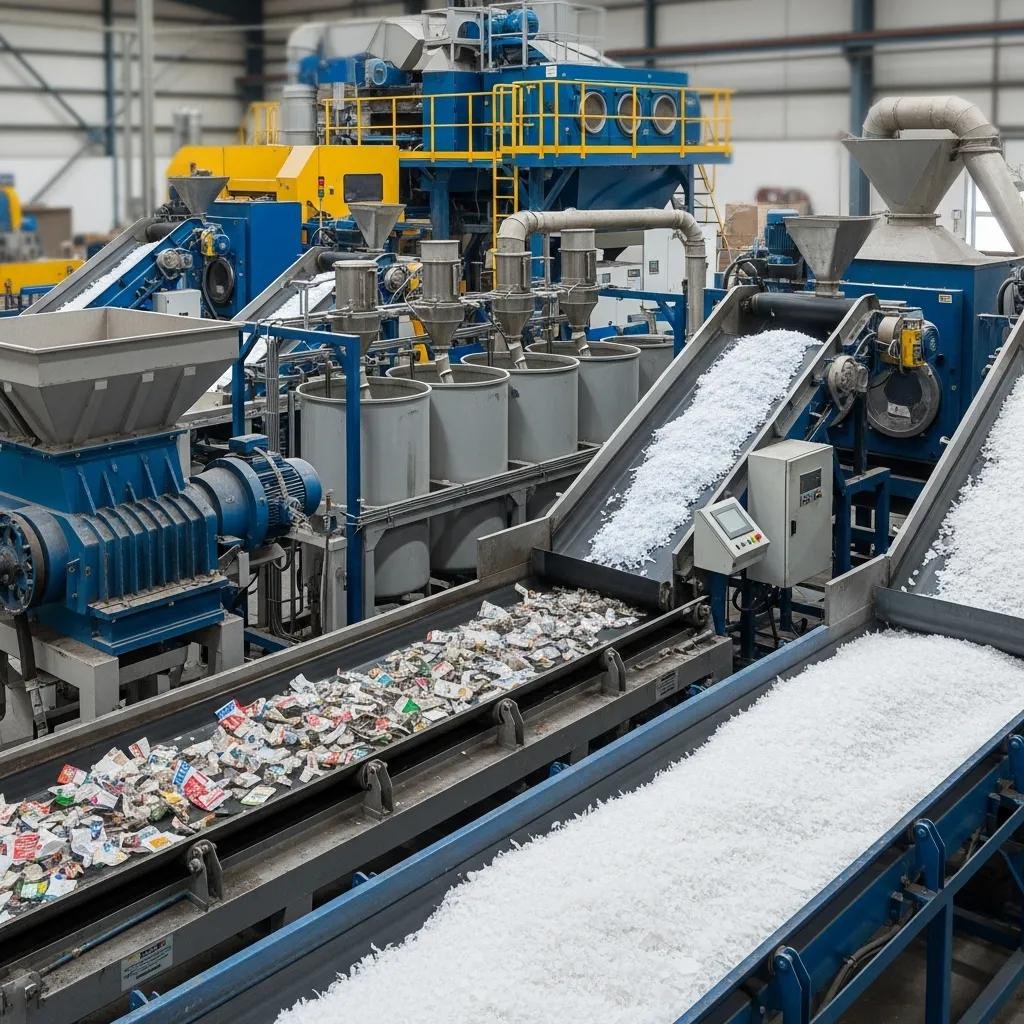
Plastic washing lines are integrated industrial systems that convert heavily contaminated waste into clean flakes or pellets ready for recycling, combining mechanical size reduction, staged washing, density separation, drying, and pelletizing to restore material value. These systems remove dirt, labels, adhesives, organics, and chemical residues through a mix of physical agitation, temperature-controlled hot washing, surfactants, and density-based separation to produce recyclate with consistent moisture and purity metrics. This article explains how complete plastic washing lines work, which waste streams are suitable, the equipment and process stages involved, and practical strategies to optimize throughput and recyclate quality. Readers will gain a material-by-material guide (film, PET, HDPE), engineer-focused process maps, and vendor-selection criteria that emphasize automation, water recycling, and lifecycle benefits. After the technical roadmap, a concise section highlights how Kingdom Machine Co., Ltd. (also known as China Evergreen Machinery Co., Ltd.) supports plant delivery, quality assurance, and customization needs for buyers seeking turnkey washing lines. The following sections cover system definitions and process steps, material-specific configurations, supplier technology differentiators, stage-by-stage equipment mapping, business ROI and compliance advantages, and common operational challenges with engineering solutions.
A plastic washing line is a coordinated assembly of machines that reduce, separate, clean, and prepare waste plastic for reprocessing, using staged mechanical and chemical actions to restore material properties and reduce contaminants. These systems work by first reducing size to expose surfaces, then applying friction and hot-chemical washes to dislodge dirt and adhesives, followed by density separation to sort polymers and centrifugal or thermal drying to achieve target moisture for pelletizing. The result is cleaned flakes or pellets with improved melt quality and lower contaminant loads, which increases market value and enables compliance with recycled-content regulations. Understanding the step sequence helps operators design lines that balance water use, energy consumption, and downstream processing needs. Below is a concise process flow listing key stages to target featured snippet users and operational planners.
The primary cleaning workflow includes:
This step list clarifies which unit operations must be sized and controlled to meet purity and moisture targets, and it sets up the next section that breaks down core machine components and their functions.
A complete washing line combines several meronomic units—shredder, conveyor, friction washer, float-sink tank, hot wash, rinse tunnel, centrifugal dryer, and pelletizer—each serving a distinct role in cleaning and preparing feedstock. Shredders and flakers perform mechanical size reduction to specified flake dimensions, which increases surface area for detergents and speeds separation; conveyors and classifiers handle material flow and remove fines. Friction washers and rotor washers apply mechanical agitation and surfactants to dislodge labels and oils, while float-sink tanks exploit density differences to separate PET from PE/PP and to remove heavy contaminants. Dryers (centrifugal or thermal) reduce moisture to the 1–3% range needed for pelletizing or extrusion, and pelletizers (strand or underwater) convert cleaned flake into consistent pellets for resale. Buyers typically evaluate capacity (kg/h), throughput, power consumption, and expected flake moisture when selecting components, and these criteria drive configuration choices between film and rigid lines.
Understanding how each component contributes to overall yield and recyclate quality leads naturally to a discussion of the physical and chemical mechanisms used to remove specific contaminants.
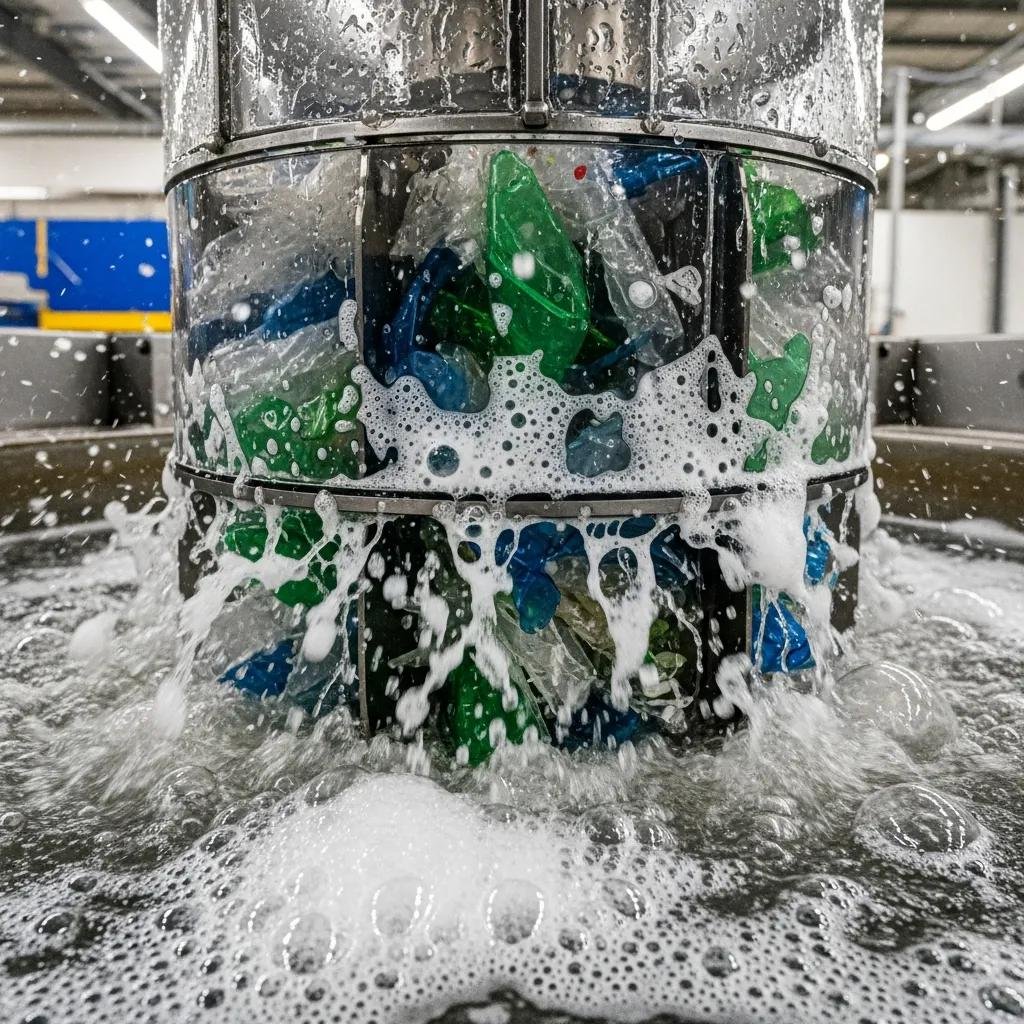
Cleaning mechanisms combine mechanical shear, chemical action, and density-based separation to reduce contaminant loads to acceptable levels for reprocessing, with operational variables such as temperature, surfactant concentration, and residence time determining efficacy. Friction washing uses high-shear paddles and counter-rotating drums to physically abrade adhesives and dirt, while hot caustic or alkaline washes break down organic residues and dissolve glue bases on labels; rinse stages flush remaining solids and surfactant. Float-sink separation helps remove heavier contaminants like sand and glass and isolates polymers of different densities; centrifugal dewatering reduces free water prior to thermal drying. Typical removal rates depend on contamination type—labels and organics often drop by 70–95% with optimized hot-wash and friction stages—so monitoring turbidity, TSS, and residual adhesive is essential. When contamination is extreme, manual pre-sorting or additional chemical pre-treatment improves final purity and reduces downstream maintenance.
These removal mechanisms form the technical foundation for mapping which material streams are best suited to specific washing configurations, which the next section addresses.
Different polymer streams require tailored washing strategies because contamination types and physical form affect how well standard unit operations work; matching waste type to configuration maximizes yield and minimizes processing costs. Post-consumer film, agricultural film, PET bottles, HDPE containers, and mixed rigid plastics each present specific challenges—stickiness and dirt for films, label and adhesive removal for bottles, and mixed-density overlaps for rigid bales. A material-by-material table below helps equipment planners and buyers quickly identify recommended washing configurations and pre-treatment needs.
This mapping helps operators choose the right sequence and diagnostic tests to validate flake quality before drying and pelletizing. The next subsections explain film-specific and bottle/HDPE approaches in more detail so engineers can refine line parameters.
Thin, flexible films such as PP and PE require careful pre-treatment to prevent agglomeration and to ensure thorough detergent penetration; operators typically debale, de-ink (if printed), and shred films to produce loosely packed flakes that feed into friction washers. Friction washers designed for films provide intense mechanical action that, combined with warm surfactant solution, dislodges dirt and sticky residues; hot washing reduces tackiness from degraded polymers and adhesives. Float-sink stages are less useful for mono-film streams but are essential when films are contaminated with heavier particulates like sand or grit. Typical throughput ranges for film lines vary by configuration, but control of residence time and agitation intensity is critical to balancing water use and flake cleanliness.
These film-handling practices lead to predictable outcomes—clean flakes at moderate moisture content—which informs decisions about drying and downstream pelletizing covered later.
PET bottle washing emphasizes label and adhesive removal, clarity retention, and removal of residual liquids; crushers or shredders pre-process bottles into flakes that enter rotor washers and hot caustic baths for adhesive hydrolysis and label detachment. Density separation (float-sink) is critical for PET to separate clear PET from colored or contaminated fractions; additional polishing steps like flotation tanks and fines removal improve optical quality for high-end applications. HDPE containers need robust washing to remove product residues and fillers and may require stronger alkaline washes and extended friction stages; after cleaning, HDPE flakes often go to pelletizing for industrial uses such as blow-molded containers or composite materials. Selecting bottle crushers, rotor washers, and appropriate caustic concentrations determines final flake purity and suitability for pelletizing.
Matching separation efficiency and drying method to target end-use supports the business case for investing in complete lines, which is discussed in later sections.
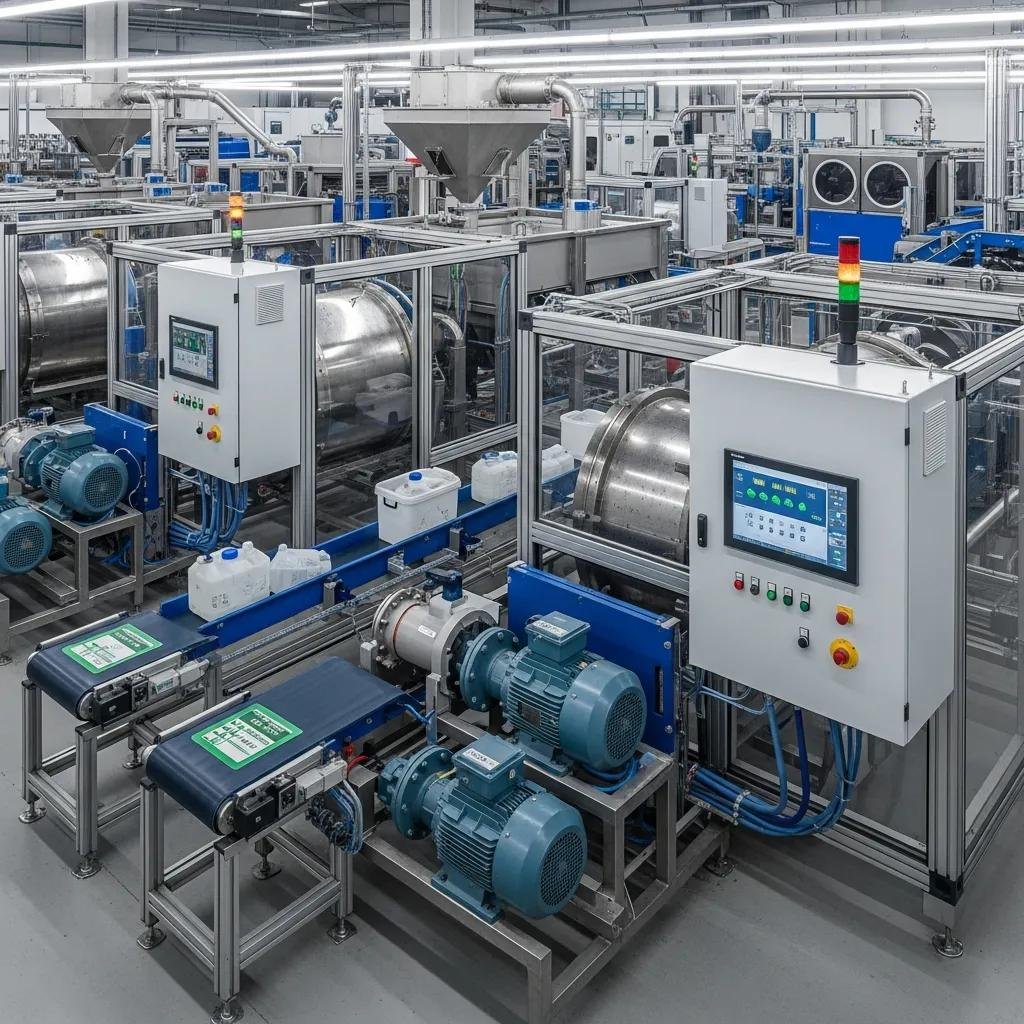
Complete washing lines benefit from engineered features that improve throughput, reduce water and energy consumption, and ensure reproducible product quality; Kingdom Machine Co., Ltd. emphasizes several practical differentiators in production and service that aim to reduce buyer risk while enabling customization. Advanced features such as modular configurations, PLC-driven automation, and energy-saving motor and pump designs improve operational consistency and lower lifecycle costs, while integration of water-recovery systems reduces freshwater demand and effluent loads. Kingdom Machine’s manufacturing and R&D capabilities support tailored solutions, and operational guarantees and inspection practices provide trust signals for project planners evaluating suppliers.
This table clarifies how increased investment in higher-efficiency modules yields better water recovery and lower output moisture, which reduces drying energy. Following these technical comparisons, the next subsection enumerates explicit supplier claims and service timelines to help procurement teams plan implementation.
Kingdom Machine highlights a combination of factory controls and after-sales assurances that support reliable deployment: a 100% final inspection during production, a two-year warranty for timer switches, and a strong R&D lab with multiple production lines and testing equipment to validate custom designs. These quality-assurance steps reduce commissioning risk and help buyers secure consistent throughput, while modular production allows standard machine delivery within 25–30 days and customized solutions in about 30–60 days. The company also positions competitive pricing by leveraging production scale and provides 24-hour online service for technical support and troubleshooting. Together, these attributes translate into faster implementation, lower commissioning defects, and clearer timelines for project managers.
Automation, such as PLC control with sensors for temperature, turbidity, flow, and motor loads, enforces consistent process parameters, reduces operator error, and lowers labor costs while improving traceability of product quality. Closed-loop water-recycling units that include screening, flocculation, clarifiers, and polishing filters can achieve high water recovery rates—often in the 60–85% range depending on configuration—thereby cutting freshwater intake and reducing effluent treatment loads. Energy-saving motors, variable-frequency drives, and heat-recovery strategies further lower operational carbon intensity, and combined monitoring of energy and water KPIs enables continuous improvement. For buyers, automation and water reuse reduce variable costs per ton and support regulatory compliance and corporate sustainability reporting.
These sustainability features connect directly to stage-by-stage process design choices, which the next section maps in detail for plant engineers.
A complete washing line follows repeatable stages—shredding, washing, separation, drying, and pelletizing—that together transform contaminated feedstock into saleable recyclate, with each stage requiring specific equipment, inputs, and outputs to meet quality targets. Proper stage design minimizes rework and energy use, and structured monitoring at each step (e.g., flake size distribution, moisture, contaminant ppm) ensures process control. The following EAV table maps each process stage to necessary equipment, key inputs, and expected outputs so engineering teams can allocate capex, utilities, and footprint.
This stage mapping clarifies where investment in water treatment, automation, and energy recovery delivers the greatest returns and sets up operational best practices described below.
Shredding reduces size and liberates trapped contaminants, creating a uniform feedstock that friction washing can more effectively clean; without proper size reduction, detergents and mechanical action cannot reach interior surfaces, reducing throughput and increasing rewash rates. Friction washing applies shear and warm surfactant solutions to remove labels, oils, and organic matter; its effectiveness depends on residence time, paddle geometry, and detergent chemistry. Float-sink separation then exploits density differences—typically with salt or freshwater mixes—to sort PET (denser) from PE/PP (less dense), and to remove heavy inorganic contaminants. Together these stages maximize yield and enable downstream drying and pelletizing to produce material that meets target purity and moisture specifications.
Understanding these interactions helps determine whether to invest in heavier shredding capacity or more advanced separation modules for specific feedstocks.
Drying choices—centrifugal mechanical dewatering versus thermal drying—balance energy consumption and final moisture targets: centrifugal drying reduces free water quickly to 3–6%, while thermal dryers (hot-air or vacuum) can reach the 1–2% range required for some extrusion and pelletizing operations. Pelletizing options include strand pelletizing, which is effective for consistent melt streams, and underwater pelletizing, which can offer finer control of pellet size and cooling. Selecting the right pelletizer and dryer depends on downstream application: higher-grade applications require lower moisture and contaminant tolerances. Typical targets are under 3% moisture for general pelletizing and under 1.5% for high-specification uses, and equipment selection should align with those targets alongside energy and throughput constraints.
These drying and pelletizing tradeoffs directly impact the commercial benefits achievable from a washing line investment, which the next section explores.
Investing in a complete washing line creates multiple revenue and cost-saving pathways: recovered feedstock reduces virgin material purchases, cleaned recyclate commands higher prices, and on-site processing cuts logistics and disposal fees. Beyond pure cost savings, ownership enables control over material quality, facilitates compliance with recyclate-content regulations, and opens access to higher-value recycling markets. Organizations should evaluate ROI by modeling feedstock availability, expected yield, sale price per ton of flakes/pellets, and variable operating costs; having realistic estimates of throughput and downtime is essential to calculating payback periods and project viability.
The following list outlines primary financial and operational benefits companies typically realize after commissioning a complete washing line.
These benefits combine to shorten payback timelines when lines are properly matched to feedstock and market demand, and they lead into practical ROI drivers explained next.
Operational efficiencies stem from higher throughput per labor hour, lower rework rates due to consistent QA, and reduced water and energy per ton when recycling systems and automation are optimized. Key ROI drivers include yield (clean flake per ton of input), product price premium for higher-purity recyclate, energy cost per ton, and maintenance/downtime rates. A sample scenario: improving water recovery from 65% to 80% reduces freshwater and effluent costs and can lower variable cost per ton by a measurable percentage; likewise, reducing output moisture by 1–2% can decrease drying energy and improve pellet quality, increasing sale price. Customization—tailoring a line to a primary feedstock—typically improves yield and shortens payback, but requires careful planning around delivery timelines and installation.
For buyers considering procurement, Kingdom Machine’s service points—such as standard delivery windows, inspection procedures, and online support—can reduce implementation risk and accelerate time-to-revenue when selecting a supplier.
High-quality washing lines enable firms to meet Extended Producer Responsibility (EPR) and recycled-content mandates by producing consistent recyclate that manufacturers will accept, which in turn supports supply-chain decarbonization and circular-material strategies. By reducing contaminants and improving melt stability, washed flakes lower the need for additives and reprocessing, extending the lifecycle of materials. Metrics such as reduction in virgin polymer consumption, liters of freshwater saved via water recycling, and decreases in landfill diversion quantify environmental performance and support corporate sustainability reporting. These measures strengthen customer and regulator confidence and position companies competitively in markets where verified recycled content is increasingly required.
Linking environmental KPIs to operational metrics completes the business case and prepares operators to address the common technical challenges below.
Operators face recurring problems such as heavy contamination loads, sticky or degraded films, mixed polymer streams with density overlap, and management of wash-water and sludge; each challenge requires targeted engineering and operational responses to preserve throughput and product quality. Effective solutions include pre-sorting and screening to remove oversized items, optimized shredding to reduce particle agglomeration, intensified hot-wash stages for adhesive removal, and advanced flotation and optical sorting where density overlaps occur. Proper water-treatment systems—screening, flocculation, and decantation—reduce TSS and BOD in effluent and recover polymer fines that would otherwise be lost.
Below are problem→solution pairs for common issues that help plant operators triage performance problems quickly.
These common mitigations show where capital and operational attention yields the largest improvements in yield and reliability, and the final subsection describes water-treatment roles in more detail.
When feedstock contains mixed polymers or heavy contamination, a cascade of pre-sorting, density separation, and selective chemical treatments is necessary to avoid contaminating high-value fractions; manual or automated pre-sort lines remove obvious contaminants, while density and optical sorting refine polymer streams. Decision rules guide whether to divert a batch to specialized recycling (e.g., chemical recycling) or to apply intensified mechanical and chemical cleaning: if residual contaminant ppm remains above project thresholds after two wash cycles, outsourcing or alternative processing may be more economical. Practical tips include sampling batches for quick TGA or FTIR checks and batching similar-density materials to maintain separation efficiency.
These operational rules help plants preserve high-value fractions while minimizing rework and reducing the risk of fouling downstream equipment.
Water treatment is central to maintaining washing-line efficiency because clean, recycled wash water reduces detergent demand, lowers freshwater intake, and minimizes effluent treatment costs; common stages include coarse screening, flocculation, settling/clarification, and filtration for polishing. Proper impurity removal prevents re-deposition of solids onto flakes, protects pumps and heat exchangers from abrasion, and recovers valuable fines and microplastics that would otherwise be lost. Recommended monitoring metrics include turbidity, total suspended solids (TSS), and biochemical oxygen demand (BOD) for regulatory compliance and process control. Regular sludge handling and scheduled backwash regimes reduce downtime and extend media life, enabling steady production and consistent product quality.
These water-treatment practices complete the operational blueprint for reliable washing-line performance and mark the end of the technical coverage.
1. Implementation checklist for plant commissioning:
These steps ensure the line meets expected throughput and quality targets while closing the loop between engineering design and commercial outcomes.
For procurement teams seeking turnkey solutions, Kingdom Machine Co., Ltd. offers customization, factory inspection, rapid delivery options, and 24-hour online service to support commissioning and long-term operation. Their combined R&D capability and production scale aim to reduce supplier risk while delivering efficient, environmentally conscious washing systems.
Elevate your machinery performance with our premium spare parts and components. Trust in our quality and reliability for optimal operation and longevity.
Maximize efficiency with expert installation for your plastic production machines. Our professional team ensures optimal performance tailored to your needs.

Transform your concepts into reality with our tailored installation solutions. Experience professional guidance and exceptional results designed just for you.

Elevate your production with essential tips for selecting the right plastic bag making equipment. Make informed choices for efficiency and quality today.
