

Reliable Spare Parts and Components for Your Machines
Elevate your machinery performance with our premium spare parts and components. Trust in our quality and reliability for optimal operation and longevity.
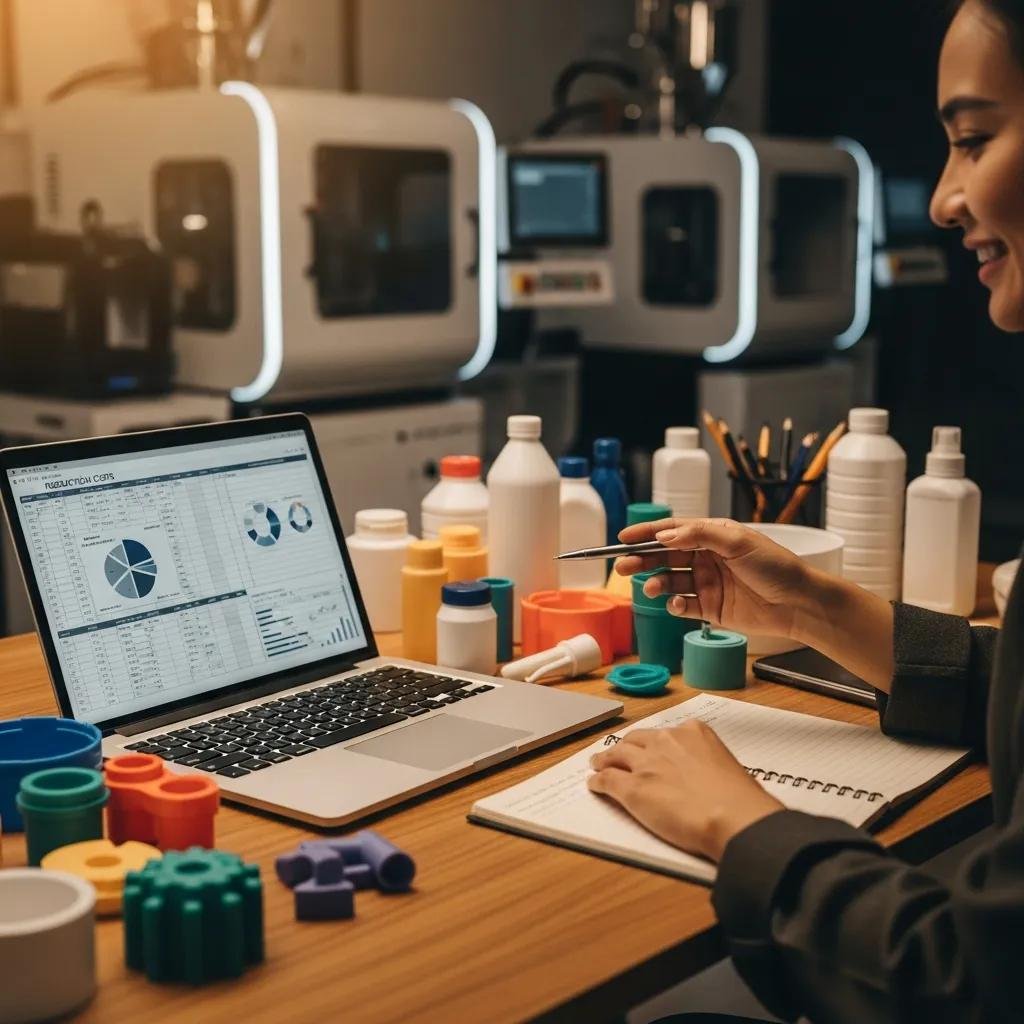
Investment costs for plastic production equipment combine upfront capital expenditure (CAPEX) and ongoing operational expense (OPEX), and understanding both is essential to evaluate return on investment (ROI) and total cost of ownership (TCO). This guide explains what buyers must consider when estimating machine cost plastic bag and film production equipment pricing, from blown film extruders to recycling lines and flexo presses. Many purchasers focus narrowly on purchase price and overlook drivers such as production capacity, automation, energy consumption, and after-sales support that determine long-term profitability. This article delivers actionable pricing ranges, payback examples, financing options, and TCO checklists so you can compare monolayer vs multilayer extruders, bag-making lines, recyclers, and printing presses with clarity. We will cover the key cost factors for blown film machines, price bands for bag-making equipment, recycling machine ROI, flexo press cost structures, and financing and TCO components to help you make informed procurement decisions in the current market.
Plastic film machine costs are driven by five core factors: production capacity, automation level, layer configuration and material compatibility, brand and service package, and energy efficiency. Each factor affects the machine’s CAPEX directly and changes the OPEX profile over the equipment lifecycle, which in turn alters ROI and payback timing. Understanding these drivers allows buyers to match machine specification to product goals, whether price-sensitive commodity film or high-value barrier films requiring co-extrusion. Below is a structured comparison that shows how specific machine attributes influence price to help prioritize trade-offs during specification.
The following table compares common machine attributes and their typical impact on price and buyer decision-making.
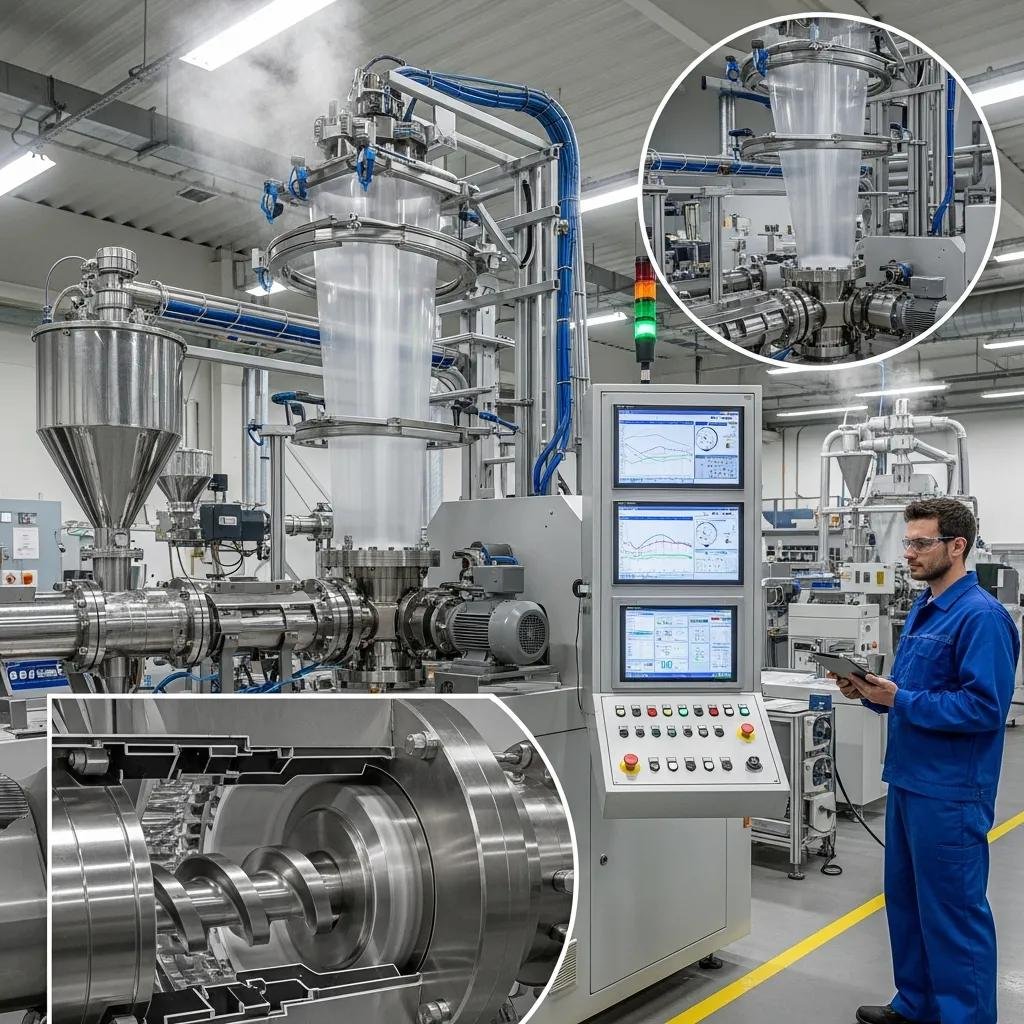
Production capacity and automation define both the purchase price and the economics per kilogram of output for blown film extruders. Higher-capacity machines require larger extruder screws, reinforced frames, and more powerful drive systems, which increase CAPEX but reduce unit capital cost when running near rated throughput. Automation—ranging from semi-automatic controls to fully integrated PLC/SCADA with remote monitoring—adds a noticeable premium but typically lowers labor, scrap rates, and downtime, improving overall OPEX. For example, doubling throughput roughly reduces CAPEX per kg by spreading fixed equipment cost across more output, while moving from semi-automatic to fully automatic control may cut labor by 30–60% and improve yield consistency.
Buyers should evaluate expected utilization because oversized capacity yields wasted capital, while undersized equipment can become a bottleneck. Considering IoT-enabled monitoring and predictive maintenance features often pays off by reducing unplanned stoppages; understanding the trade-off between automation cost and lifecycle savings is essential when estimating true machine cost plastic bag or film producers will face.
Monolayer blown film machines are simpler and generally less expensive, suitable for single-polymer films used in basic packaging and liners. Multi-layer machines incorporate additional extruders, feed-blocks or co-extrusion die heads and sometimes barrier layers, which increase mechanical complexity and cost but enable advanced properties like oxygen or moisture barriers and enhanced sealability. The upfront price delta between a monolayer unit and a three-layer co-extrusion line can be 30–60% depending on the number of extruders and control sophistication, but multi-layer capability enables product differentiation that can command higher margins.
Deciding between monolayer and multi-layer depends on target products, material costs, and expected premium pricing for specialized films. When barrier properties or the ability to run different resin types are required, the incremental CAPEX is often recovered through higher product value and reduced need for downstream laminating operations, which affects ROI positively when matched to market demand.
Plastic bag making equipment cost varies by bag type, automation level, and whether the line includes ancillary units such as printing, slitting, or winding. Basic manual or semi-automatic T-shirt and shopping bag machines represent the lower end of the spectrum, while fully automatic high-speed lines with integrated flexo printing or gravure systems push price significantly higher. Material compatibility—especially for biodegradable resins—can require modified feed and heating systems that add to the investment. Below is a concise price-band table that helps compare machine types and expected ROI to inform purchasing decisions.
This table summarizes typical bag machine categories, automation, and estimated price ranges to give buyers a fast reference for budgeting.
This cost-band snapshot highlights that buyers should assess production volume forecasts and downstream needs, because ancillary equipment can shift the cost-benefit balance in favor of integrated lines that reduce handling and improve margins.
When discussing specific bag machines, Kingdom Machine Co., Ltd. (also identified as China Evergreen Machinery Co., Ltd.) offers multiple configurations for T-shirt and shopping bag production and provides one-stop customization and after-sales service for buyers seeking tailored lines. Their positioning—competitive prices from large-scale production combined with quality assurance practices and a two-year warranty on timer switches—makes them an example of the vendor-side factors buyers should weigh when comparing quotes. Understanding vendor UVPs and service terms is the logical next step when selecting among similarly specified machines.
T-shirt and shopping bag making machinery price ranges depend strongly on automation and output rate. Entry-level semi-automatic T-shirt bag machines are at the lower end of cost bands and suit smaller producers or startups, producing reasonable ROI when demand is stable. Mid-tier fully automatic shopping bag machines include automatic film feeding, cutting and sealing and typically demand higher CAPEX but provide better margins through higher speed and reduced scrap. High-end lines with integrated printing, winding, and quality control systems are the most expensive but support large-scale production and brand-differentiated products.
Regional shipping, installation, and commissioning costs also influence delivered price, and buyers should request full-line quotes that include electrical, tooling, and training to compare apples-to-apples. Considering typical outputs and cycle times is critical to estimate throughput-based payback and to develop reliable ROI models.
Automation levels add upfront cost but provide steady operational savings through labor reduction, consistent cycle times, and improved yields. The premium for full automation can be substantial, yet in markets with high labor costs or tight quality tolerances it often shortens payback significantly. Producing biodegradable or compostable bags imposes additional requirements—feeding systems, temperature control, and modified chillers or winding systems—to handle resin behavior, which raises both CAPEX and often tooling expense.
However, biodegradable products frequently sell at a market premium that can offset the added equipment cost; automating biodegradable-resin processes also reduces waste and improves repeatability. Buyers should model scenarios for material cost differentials and expected price premiums to see whether specialized equipment or retrofit kits make financial sense.
Recycling machinery investment spans granulators and pelletizers up to full recycling lines, with wide variance by throughput, automation, and end-product specification. Capital costs are linked to required throughput (kg/h), contamination handling, and the need for downstream drying or extrusion for pelletizing. Recycling equipment reduces raw material purchases and landfill disposal costs, and when sized correctly it can deliver paybacks through material recovery and resale of reprocessed polymer. Below is a focused price-band table for common recycling machine types and their typical throughput-to-cost relationships.
This table outlines typical recycling equipment types, key capacity attributes, and indicative price relationships to help estimate CAPEX vs recovered material value.
Granulators range from economical benchtop or in-line units for small operations to heavy-duty industrial units for large-volume processors, with price scaling primarily by rotor size and motor power. Pelletizers and extrusion-based recycling lines require more capital because they combine drying, melt filtration, and pellet cutting, and often need auxiliary systems like water treatment for washing stages. Throughput correlates closely with cost: increasing design throughput by a factor typically pushes the price into the next tier as components must be upsized and controls enhanced.
When estimating ROI, factor in material recovery rate, the value of replaced virgin resin, and any avoided disposal fees. Installation and auxiliary systems can add materially to the delivered cost, so buyers should request comprehensive quotes that include utilities, civil works, and waste handling equipment.
Environmental benefits translate to financial value through reduced raw material purchases, lower waste disposal costs, and potential regulatory or subsidy incentives; these factors materially improve payback for recycling investments. A typical benchmark for recycling equipment payback falls in the 12–24 month range for well-utilized lines with stable feedstock and resale channels, though actual payback depends on resin value, contamination levels, and energy efficiency. When recycled pellets offset purchased virgin resin, even modest recovery rates can yield substantial annual savings that shorten amortization periods.
Buyers should quantify avoided disposal fees and estimate the market price for recycled pellets when calculating ROI, and include potential incentives or branding value associated with circular production. These considerations lead naturally to understanding printing equipment costs and how added value from printing affects overall line economics.
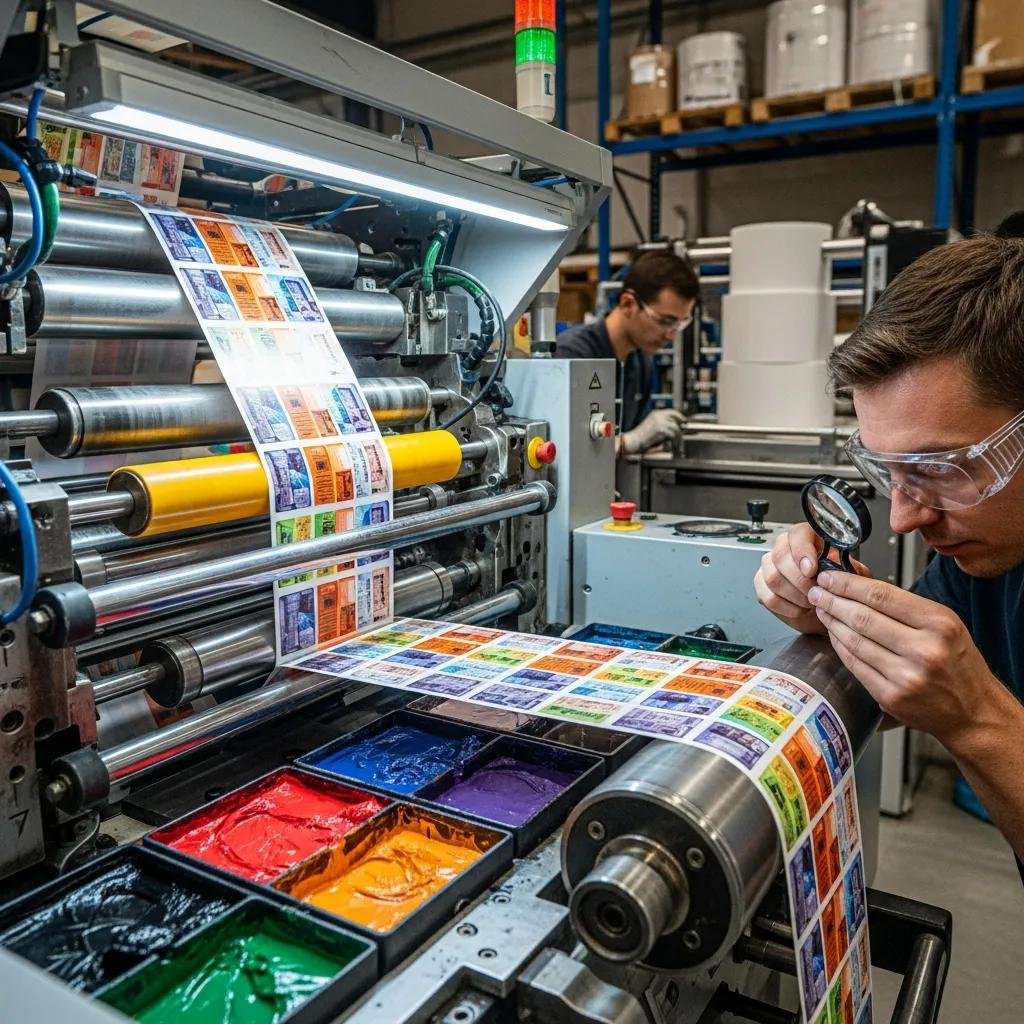
Flexo printing press pricing depends on web width, number of print stations, print technology (anilox, UV/solvent), and automation features like register control and quick-change cylinders. Narrow web flexo presses are less expensive and well-suited for labels and small rolls, while wide web presses accommodate larger bags and films but require larger drive systems, increased plate costs, and more sophisticated drying sections. Operational costs include consumables such as plates, inks, anilox rollers, and maintenance to control downtime and print consistency. The table below contrasts narrow vs wide web presses and outlines typical operational expense categories.
Below is a concise comparison of flexo press categories and their operational cost drivers to help project both CAPEX and ongoing expenses.
Narrow web flexo presses are designed for smaller rolls and shorter runs, offering lower initial purchase prices and faster job changeovers for variable jobs. Wide web presses cost more due to larger frames, higher-torque drives, and bulkier drying sections, and they are economically favorable when producing long runs of large-format printed film or bags. The choice affects ROI: narrow web suits diversified short runs with quick SKU changes, while wide web presses deliver lower unit print costs on sustained high-volume jobs. Buyers should model expected run lengths and changeover frequency to see which width yields the best lifecycle cost per printed square meter.
Consider plate life, setup labor, and expected ink consumption when comparing machines; wider web widths and higher print densities magnify consumable expenses and energy use for solvent or thermal drying systems.
Operational expenses for flexo printing include ink consumption per 1,000 sq.m., plate production costs, replacement anilox rollers, energy for drying systems, and routine maintenance and spare parts. Plate costs depend on quality and life expectancy; frequent plate changes increase labor and downtime. Inks and solvents represent a consistent line-item, and higher-proficiency presses or specialty inks for food-grade or high-barrier films can be costlier. Scheduled maintenance, operator training, and inventory of critical spare parts are important to minimize unplanned downtime and maintain color consistency.
Calculating operational expense per printed unit requires combining expected ink and consumable usage with labor and energy consumption profiles, which then feeds into TCO assessments for the press and the broader production line.
Financing choices and a rigorous TCO analysis determine how affordable a machinery investment is in practice and how quickly it contributes to profitability. Common financing instruments include equipment leasing, bank loans, and installment payment agreements, each with different effects on cashflow and balance sheet treatment. TCO for plastic production equipment encompasses CAPEX, installation, training, energy, maintenance, consumables, downtime, and eventual resale or disposal value; understanding the split between one-time and recurring costs is crucial for realistic payback modeling. The table below lays out typical cost categories, whether they are recurring or one-time, and approximate percentage estimates relative to CAPEX to guide budgeting and financing decisions.
This EAV table clarifies common TCO components, indicating whether each is a recurring operational expense or a one-time capital addition and offering typical estimates as a share of initial CAPEX.
When selecting vendor support, Kingdom Machine Co., Ltd. (also identified as China Evergreen Machinery Co., Ltd.) positions itself as a one-stop customization service with timely after-sales service and easy maintenance, emphasizing competitive pricing and energy-efficient machinery—services that buyers should weigh when comparing financing options and TCO projections. Asking vendors for lifecycle cost estimates and references on energy consumption and defect rates helps align purchase decisions with long-term operating budgets.
Financing structure changes effective cost by introducing interest, fees, and potential tax treatment differences between leasing and purchase, which in turn affect monthly cashflow and payback timelines. Longer-term loans lower monthly payments but increase total interest, while operating leases may improve short-term liquidity and shift maintenance responsibility depending on contract terms. A sample amortization comparison helps illustrate how different down payments and interest rates alter monthly burdens and time to positive cashflow. Buyers should also consider whether financing solutions include maintenance packages or spare-part allowances, as bundled service can simplify budgeting.
Selecting between leasing and purchase depends on balance-sheet preferences, tax rules in the buyer’s jurisdiction, and the expected useful life of the equipment relative to financing terms. The next subsection lists practical TCO components to include in any procurement checklist.
TCO components form the checklist buyers need for realistic budgeting: CAPEX, installation, training, spare parts, energy, labor, consumables, routine maintenance, downtime costs, and end-of-life disposal or resale value. Quantifying each element as a percentage of CAPEX or as annual operating cost gives a repeatable framework for comparing alternative equipment and vendor proposals. Practical steps to minimize TCO include selecting energy-efficient motors, specifying preventive maintenance schedules, securing clear spare-part lists and lead times, and negotiating service-level agreements that reduce downtime risk.
A rigorous TCO model that integrates expected production volume, material costs, and financing terms will reveal true per-unit cost and payback period, enabling confident investment decisions and helping buyers choose between competing machines and suppliers.
These procurement best practices help buyers balance initial machine cost plastic bag and film equipment pricing against the longer-term operational and financial realities that determine success.
Elevate your machinery performance with our premium spare parts and components. Trust in our quality and reliability for optimal operation and longevity.
Maximize efficiency with expert installation for your plastic production machines. Our professional team ensures optimal performance tailored to your needs.

Transform your concepts into reality with our tailored installation solutions. Experience professional guidance and exceptional results designed just for you.

Elevate your production with essential tips for selecting the right plastic bag making equipment. Make informed choices for efficiency and quality today.
